
How to Manage Side Effects on Semaglutide
A practical guide to common semaglutide side effects, what may help at home, and warning signs that mean you should contact your clinician.
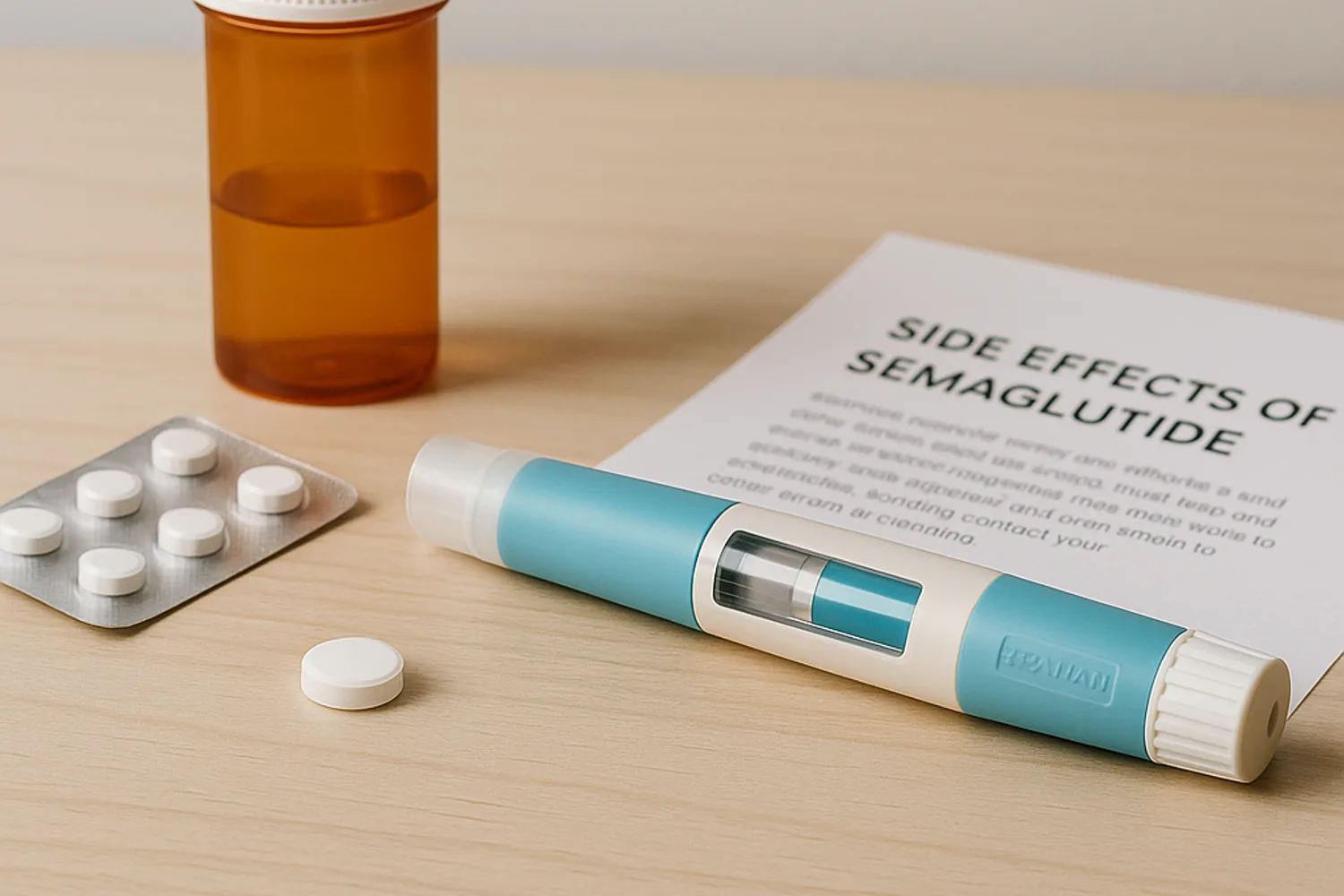
How to Manage Side Effects on Semaglutide
Semaglutide can be very effective, but it is also common to feel some side effects when you first start or when your dose goes up. In most people, the hardest part is the early adjustment period.
The encouraging part is that the most common symptoms are usually digestive, often improve with time, and are often easier to handle when you slow down meals, stay hydrated, and avoid pushing through a dose increase too quickly.
This guide focuses on the practical side: what side effects are common, what may help at home, and which symptoms should prompt a call to your clinician. Consult your healthcare provider before starting any medication.
What side effects are most common on semaglutide?
Official semaglutide references consistently list nausea, vomiting, diarrhea, constipation, abdominal pain, and indigestion-type symptoms among the most common side effects.
Wegovy safety information also lists symptoms such as:
- nausea
- diarrhea
- vomiting
- constipation
- abdominal pain
- headache
- fatigue
- dizziness
- abdominal distention or bloating
- burping / eructation
- reflux symptoms in some patients
These are most likely to show up:
- after starting treatment
- after a dose increase
- when meals are too large, rich, greasy, or too fast
Why semaglutide causes these symptoms
Semaglutide partly works by slowing stomach emptying and reducing appetite. That is part of why it helps with eating less and feeling full sooner.
But that same effect can also make some people feel:
- queasy after meals
- overly full after small portions
- bloated
- backed up / constipated
- uncomfortable if they eat the same way they did before treatment
So side-effect management is often really about adjusting your eating rhythm to match the medication.
What can help with nausea?
Nausea is probably the most common complaint.
What often helps:
- eat smaller meals instead of large ones
- eat more slowly
- stop when you feel comfortably full, not overly full
- choose bland, lower-fat foods for a few days if symptoms flare
- sip water regularly through the day
- avoid lying flat right after eating
Many people do worse when they:
- eat quickly
- eat a heavy restaurant meal
- combine greasy food with a dose-escalation week
- let themselves get dehydrated
If nausea seems worst on the first 1–3 days after injection, that pattern is common. It does not necessarily mean the medicine is wrong for you, but it may mean your body needs more time at the current dose.
What can help with vomiting?
Vomiting deserves a bit more caution than mild nausea because it can tip into dehydration.
Practical steps:
- take small sips of water frequently
- try simple foods once your stomach settles
- avoid large meals for the rest of the day
- avoid alcohol if symptoms are active
- contact your clinician if vomiting is repeated or you cannot keep fluids down
A key warning sign is not being able to drink enough to stay hydrated. That is not something to just “push through.”
What can help with diarrhea?
Diarrhea can happen early on or after a dose change.
What may help:
- drink more fluids
- consider electrolyte replacement if losses are significant
- temporarily choose simple, easy-to-digest foods
- reduce very fatty, spicy, or highly processed foods for a few days
If diarrhea is persistent, severe, or paired with dizziness, weakness, or reduced urination, contact your clinician.
What can help with constipation?
Some people get the opposite problem: constipation.
Helpful basics include:
- more water
- gentle daily movement, like walking
- gradual increase in fiber if you tolerate it well
- not ignoring the urge to go
Be careful with suddenly eating a huge amount of fiber if you are already bloated and under-hydrated. For some people, that makes things worse rather than better.
What can help with bloating, fullness, or stomach discomfort?
These symptoms often improve when you change meal size and pace.
Try to:
- eat smaller portions
- chew thoroughly
- reduce fizzy drinks for a while
- limit very fatty meals
- avoid eating past fullness
A lot of semaglutide stomach discomfort is really a mismatch between slower gastric emptying and old portion sizes.
What about headaches and fatigue?
Headaches and fatigue can happen for a few reasons during treatment, including:
- eating much less than usual
- dehydration
- poor sleep
- low blood sugar risk if semaglutide is combined with other diabetes medicines
What may help:
- drink enough fluids
- make sure you are still eating enough protein and overall nutrition
- keep a steadier routine instead of skipping long stretches without food
- review other glucose-lowering medicines with your clinician if symptoms suggest lows
Why dose escalation matters so much
One of the best ways to reduce side effects is simply not rushing titration.
Semaglutide is usually started low and increased gradually for a reason. If side effects are strong, many clinicians pause at the current dose longer rather than forcing the next step immediately.
If you are struggling, do not change the dose on your own. But do tell your clinician exactly:
- when symptoms happen
- how long they last
- whether they started after a dose increase
- whether you can still eat and drink normally
That information is often enough to make the next step safer.
When should you contact your clinician quickly?
Call your clinician promptly if:
- you are unable to keep fluids down
- vomiting is repeated
- diarrhea is severe or prolonged
- side effects are making you skip doses or consider stopping
- you feel faint or significantly dehydrated
- you think you may be having low blood sugar, especially if you also use insulin or a sulfonylurea
Which symptoms are more serious?
Some symptoms need faster medical attention.
Severe stomach pain
Severe abdominal pain, especially if it does not go away and may radiate to the back, can be a warning sign for pancreatitis.
Gallbladder symptoms
Semaglutide references also warn about gallbladder problems. Symptoms that deserve urgent review include:
- pain in the upper right abdomen
- fever
- yellowing of the skin or eyes
Allergic reaction symptoms
Seek urgent help for:
- swelling of the face, lips, tongue, or throat
- trouble breathing
- trouble swallowing
- severe rash
Vision changes
Any meaningful change in vision should be discussed promptly, especially in people with diabetes.
Thyroid warning context
Semaglutide carries a boxed warning related to thyroid C-cell tumors seen in rodents. Human risk is not known. People with a personal or family history of medullary thyroid carcinoma (MTC) or MEN 2 should discuss this carefully with their clinician.
A simple mindset that helps
A good practical rule is:
- mild symptoms that are improving can often be managed supportively
- symptoms that stop you from eating, drinking, or functioning normally need clinician input
- severe pain, allergic symptoms, or red-flag symptoms need urgent medical attention
Bottom line
As of May 8, 2026, the best-supported advice on semaglutide side effects is still fairly simple: eat smaller meals, slow down, hydrate well, avoid rushing dose increases, and pay attention to red flags.
Most common side effects are digestive and often improve with time. But if you cannot keep fluids down, have severe abdominal pain, develop gallbladder-warning symptoms, or feel too unwell to continue normally, contact your clinician promptly. Consult your healthcare provider before starting any medication.
Sources
- MedlinePlus — Semaglutide Injection Drug Information: https://medlineplus.gov/druginfo/meds/a618008.html
- MedlinePlus — Semaglutide Drug Information: https://medlineplus.gov/druginfo/meds/a619057.html
- Wegovy safety profile (NovoMedLink): https://www.novomedlink.com/obesity/products/treatments/wegovy/efficacy-safety/safety-profile.html
- Wegovy prescribing information: https://www.accessdata.fda.gov/drugsatfda_docs/label/2024/215256s011lbl.pdf
- Ozempic prescribing information: https://www.accessdata.fda.gov/drugsatfda_docs/label/2025/209637s025lbl.pdf
Written by
BHMS
Senior Medical Reviewer
Dietitian with experience in nutrition counseling, meal planning and promoting healthy lifestyles. Dedicated to help individuals achieve optimal health and well-being through personalized nutrition strategies. Skilled in providing expert guidance for managing conditions like diabetes, weight challenges and Lifestyle management.
View profile →Reviewed by
Pharmacist
Senior Medical Reviewer
Hinal is a Pharmacist professional who reviews WeightEasy health content for medical and editorial accuracy.
View profile →