
What to Eat While Taking Obeda: Diet Guide for Indian Patients
This India-specific guide covers dietary recommendations for patients taking Obeda, including foods to choose and avoid during treatment.
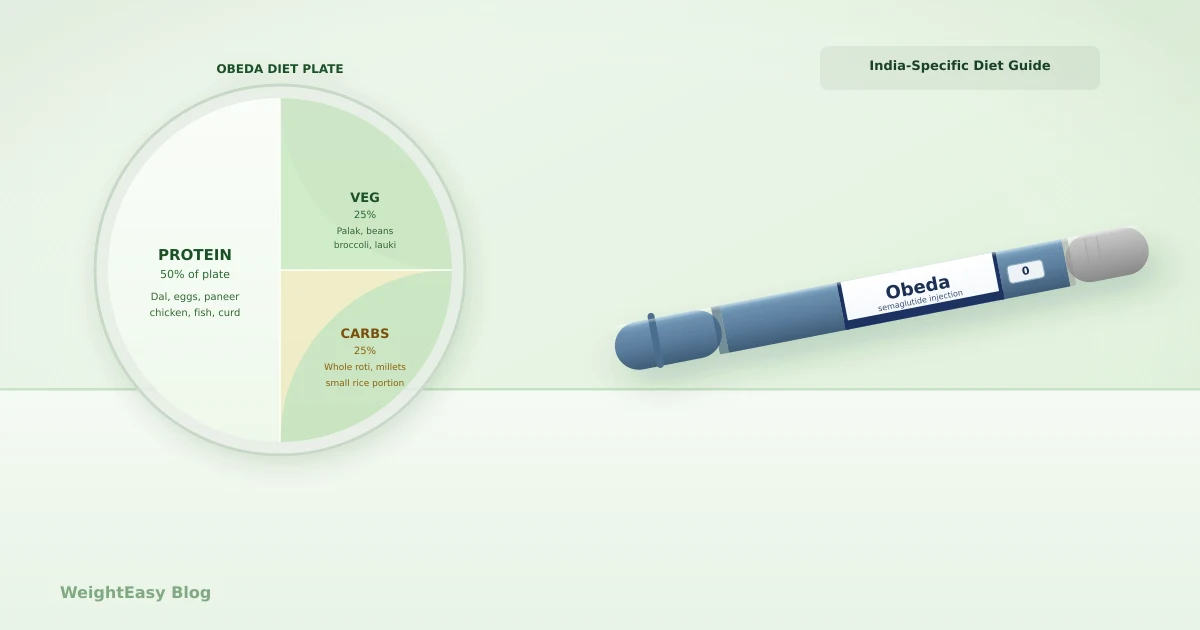
Obeda reduces your appetite. But what you eat when you do eat matters enormously -- for your results, for your side effects, and for your long-term health.
This guide is written specifically for Indian patients. It uses Indian foods, Indian meal patterns, and addresses the specific challenges of eating well on semaglutide in the Indian context.
Important: Always consult your healthcare provider or a registered dietitian for personalised dietary advice. This article is for informational purposes only.
Why Diet Is Critical on Obeda
Obeda does not choose what you eat -- it just makes you less hungry. When appetite is suppressed, you eat less. But if those smaller portions are mostly refined carbohydrates and unhealthy fats, you will:
- Lose less fat (and more muscle)
- Experience more side effects, especially nausea
- See slower weight loss progress
- Miss out on the nutrition your body needs during rapid change
The patients who achieve the best results on semaglutide consistently eat higher protein, more vegetables, and fewer ultra-processed foods. This is not an extreme diet -- it is smart eating within the appetite window the medication creates.
The Core Principles
1. Prioritise Protein at Every Meal
Protein is the most important macronutrient on Obeda. It preserves muscle mass during weight loss, keeps you full longer, and requires more energy to digest.
Target: 1.2-1.5g of protein per kg of body weight daily.
| Weight | Protein Target |
|---|---|
| 70 kg | 84-105g per day |
| 80 kg | 96-120g per day |
| 90 kg | 108-135g per day |
| 100 kg | 120-150g per day |
Best Indian protein sources:
| Food | Approx. Protein |
|---|---|
| Eggs (2 whole) | 12g |
| Paneer (100g) | 18g |
| Chicken breast (100g) | 31g |
| Fish (100g) | 22-25g |
| Dal (1 cup cooked) | 9g |
| Curd/Greek yoghurt (200g) | 10-14g |
| Soya chunks (50g dry) | 25g |
| Rajma/chana (1 cup cooked) | 14-15g |
2. Keep Portions Small and Frequent
Obeda slows gastric emptying. Large meals stay in the stomach longer, increasing nausea and bloating significantly. Eat smaller portions -- stop the moment you feel comfortably satisfied, not full.
Recommended pattern: 3 smaller meals with 1-2 light snacks if genuinely hungry. Avoid eating past fullness -- this is the primary cause of vomiting on semaglutide.
3. Reduce Fatty, Heavy Foods (Especially Early On)
Fat slows gastric emptying independently of Obeda. Combining both means food sits in your stomach much longer than it should, dramatically worsening nausea.
In the first 8 weeks especially, minimise:
- Deep-fried foods (pakoras, samosas, poori, fried snacks)
- Heavy, oily curries with large amounts of ghee or oil
- Full-fat cream-based dishes
- High-fat meats like fatty mutton
4. Reduce Refined Carbohydrates
White rice, white bread, maida-based rotis, and sugary foods cause rapid blood sugar spikes that counteract Obeda's metabolic benefits. They also provide calories with minimal nutritional density.
Smarter carbohydrate swaps:
- White rice - Smaller portion of rice, or switch to millets (bajra, jowar, ragi) or quinoa for some meals
- Maida roti - Whole wheat roti, or try millet rotis
- Sugary chai (2-3 cups/day) - Reduce sugar, switch to herbal tea or black tea/coffee
- Biscuits and packaged snacks - Handful of nuts, curd, or fruit
5. Stay Hydrated
Dehydration worsens nausea significantly. Aim for 2-2.5 litres of water daily. Sip throughout the day rather than drinking large amounts at once (which can worsen bloating).
Good hydration options: plain water, diluted nimbu pani (lemon water, low sugar), coconut water, thin buttermilk (chaas), herbal teas.
Avoid: Carbonated drinks (worsen bloating), excessive chai/coffee (can irritate the stomach), alcohol (interacts with medication and worsens side effects).
What a Good Day of Eating Looks Like on Obeda
Morning (8 AM): 2 eggs (any style) + 1 whole wheat roti + a cup of curd. Or: moong dal chilla (2) with minimal oil + curd.
Mid-morning (11 AM) if hungry: A handful of roasted makhana, or a small apple, or a small bowl of curd.
Lunch (1 PM): Small bowl of dal + 1-2 rotis (whole wheat) + generous serving of sabzi (non-starchy vegetables like palak, lauki, tinda, beans) + small portion of rice if desired. Avoid large portions of rice as the main meal.
Afternoon (4 PM) if hungry: Small bowl of curd with a few nuts. Or: a piece of fruit (banana, orange, guava). Or: a boiled egg.
Dinner (7-8 PM): Grilled/baked chicken or fish (100-150g) + mixed vegetable sabzi + 1 roti or small bowl of dal soup. Keep dinner lighter than lunch.
Avoid: Eating close to bedtime. Give yourself at least 2-3 hours between your last meal and sleep.
Foods to Avoid or Minimise
| Food Category | Specific Items | Why |
|---|---|---|
| Fried foods | Pakoras, samosas, puri, bhajji | Worsens nausea, high calories |
| Heavy dairy | Full cream paneer in large amounts, malai | Slows digestion further |
| Sugary drinks | Cold drinks, fruit juices, sweetened chai | Blood sugar spikes, empty calories |
| Ultra-processed | Biscuits, chips, namkeen, instant noodles | Low nutrition, high calories |
| High-fat meat | Fatty mutton, red meat with fat | Slows emptying significantly |
| Alcohol | Beer, whisky, wine | Worsens side effects, counteracts medication |
| Carbonated drinks | Soda, diet drinks | Causes significant bloating |
Eating During Nausea Episodes
When nausea is severe (usually weeks 1-4), keep food very plain and light:
- Plain khichdi (rice and moong dal, lightly cooked)
- Plain boiled rice with a pinch of salt
- Thin dal soup (not spiced heavily)
- Toast with a little butter
- Banana
- Plain curd
- Coconut water for hydration
Avoid eating anything you really enjoy during severe nausea -- association with nausea can make a favourite food aversive for weeks.
How WeightEasy Personalises Your Obeda Diet
A general diet guide is a starting point. But your ideal eating plan on Obeda depends on your starting weight, food preferences, cultural eating patterns, and whether you have additional conditions like diabetes or high blood pressure.
WeightEasy creates personalised GLP-1 diet guidance for Indian patients -- accounting for your specific situation, your food preferences, and how your appetite is changing as you progress through treatment. The results speak for themselves in the patients who use structured dietary support versus those who navigate it alone.
If you are starting Obeda, the right support can make a significant difference. WeightEasy helps you stay consistent, manage side effects, and achieve better results.
The Bottom Line
Eating well on Obeda does not require an extreme diet. It requires smart choices within a naturally reduced appetite: prioritise protein, reduce fatty and fried foods (especially early on), eat smaller portions more slowly, and stay hydrated.
Indian food is full of excellent, nutritious options for GLP-1 users. Dal, eggs, paneer, vegetables, and whole grains -- the traditional staples -- align well with what Obeda needs to work best.
Consult your healthcare provider before starting any medication. Consult a registered dietitian for personalised dietary advice.
Sources
- MedlinePlus — semaglutide injection: https://medlineplus.gov/druginfo/meds/a618008.html
- CDC — healthy weight and growth: https://www.cdc.gov/healthy-weight-growth/index.html
- WHO — obesity and overweight: https://www.who.int/news-room/fact-sheets/detail/obesity-and-overweight
- STEP 1 semaglutide trial — PubMed: https://pubmed.ncbi.nlm.nih.gov/33567185/
Related Articles
-
STEP-1 and STEP-4 trial data -- dietary adherence and semaglutide outcomes
-
Obesity Medicine Association -- dietary recommendations for GLP-1 users
-
Indian Council of Medical Research (ICMR) -- dietary guidelines for Indians (2024)
-
National Institute of Nutrition (NIN) -- protein content of Indian foods
FAQ
What should I eat while on Obeda?
Focus on high-protein foods (dal, eggs, paneer, chicken, fish), non-starchy vegetables, and complex carbohydrates in moderate amounts. Prioritise protein at every meal to preserve muscle mass and amplify fat loss. Eat smaller, more frequent meals rather than large ones.
What foods should I avoid on Obeda?
Avoid high-fat, greasy foods (fried snacks, heavy curries) which worsen nausea. Limit refined carbohydrates (white rice, maida, sugar) which undermine weight loss. Reduce ultra-processed snacks and sugary drinks. Carbonated drinks worsen bloating.
Can I eat rice on Obeda?
Yes, in moderation. Opt for smaller portions, combine with plenty of protein and vegetables, and consider switching some meals to millets, quinoa, or whole grains for better blood sugar control. Rice is not banned -- portion size is what matters.
How much protein should I eat on Obeda?
Aim for 1.2-1.5g of protein per kilogram of body weight per day. At 80kg, that is 96-120g of protein daily. Good Indian sources include dal, eggs, paneer, curd, chicken, fish, and soya products.
Is intermittent fasting safe on Obeda?
Obeda already significantly reduces appetite. Many GLP-1 users naturally drift toward fewer, smaller meals. Extended fasting (beyond 16 hours) is not recommended without medical supervision, as eating too little can cause nutritional deficiencies and muscle loss.
Why does eating fatty food make nausea worse on Obeda?
Obeda slows stomach emptying. High-fat meals stay in the stomach longer than other foods, compounding this delay and significantly worsening nausea and bloating. This is why a low-fat, easily digestible diet in the early weeks makes a major difference.
Written by
Dietician / Nutritionist
Health Content Writer
Utkarsha Somani is a Dietician / Nutritionist professional who contributes evidence-informed health and wellness content for WeightEasy.
View profile →Reviewed by
Dietician / Nutritionist, Phd scholar
Senior Medical Reviewer
Nishat Anjum is a Dietician / Nutritionist, Phd scholar professional who reviews WeightEasy health content for medical and editorial accuracy.
View profile →