
Protein on GLP-1: How Much You Actually Need and Why It Matters
Understand the importance of protein intake while using GLP-1 medications and practical tips to meet your nutritional needs.
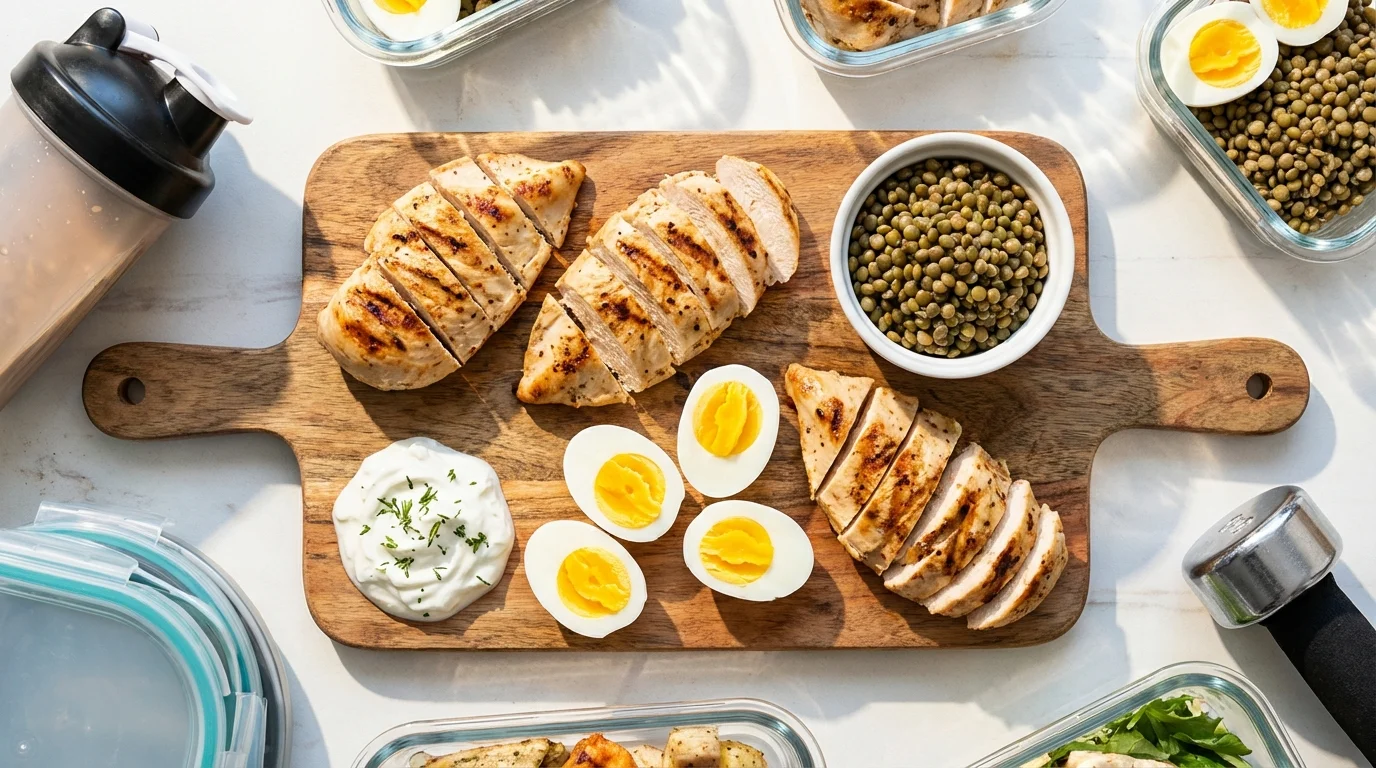
One of the most consistent side effects of GLP-1 therapy is also one of its main benefits: a significant reduction in appetite. You eat less, feel full faster, and have fewer food cravings.
But eating less also means taking in less protein, unless you are deliberate about it. And on GLP-1 therapy, protein intake matters more than at almost any other time.
Why protein is critical during GLP-1 treatment
When your body loses weight, it does not lose only fat. It also loses some muscle, how much depends largely on protein intake and physical activity.
Muscle mass matters for several reasons:
- Metabolic rate: muscle tissue burns more calories at rest than fat tissue. Less muscle means a slower metabolism, making long-term weight maintenance harder
- Strength and function: muscle loss accelerates with age and worsens mobility
- Body composition: people with higher muscle mass look and feel different from those who lost the same weight but with more muscle loss
In clinical trials, GLP-1 medications have been associated with some lean mass reduction alongside fat loss. The proportion of lean mass lost tends to be higher than would be ideal. The primary driver is inadequate protein intake during caloric restriction.
How much protein do you need?
Standard dietary guidelines recommend 0.8 g of protein per kg of body weight. But standard guidelines are set for sedentary adults in caloric balance, not for people in active weight loss on GLP-1 therapy.
The evidence-based recommendation during active weight loss is:
1.2–1.6 g of protein per kg of body weight per day
At higher activity levels or if you are doing resistance training: 1.6–2.0 g/kg.
What that looks like in practice
| Body weight | Minimum protein target | Active target |
|---|---|---|
| 70 kg (154 lbs) | 84–112 g/day | 112–140 g/day |
| 90 kg (198 lbs) | 108–144 g/day | 144–180 g/day |
| 110 kg (243 lbs) | 132–176 g/day | 176–220 g/day |
For many GLP-1 users eating 1,000–1,400 kcal per day, hitting 120+ g of protein requires intentional planning.
The best protein sources for GLP-1 users
The most efficient protein sources, highest protein per calorie:
Animal sources (easiest to hit targets)
- Chicken breast: 31 g protein / 165 kcal per 100 g
- Tuna (canned in water): 30 g protein / 116 kcal per 100 g
- Greek yoghurt (low-fat): 17 g protein / 100 kcal per 170 g serving
- Eggs: 6 g protein per egg, 78 kcal
- Cottage cheese: 25 g protein / 200 kcal per cup
- Salmon: 25 g protein / 175 kcal per 100 g
- Shrimp: 24 g protein / 99 kcal per 100 g
Plant-based sources
- Tofu (firm): 17 g protein / 144 kcal per 100 g
- Edamame: 18 g protein / 188 kcal per cup
- Lentils (cooked): 18 g protein / 230 kcal per cup
- Tempeh: 31 g protein / 193 kcal per 100 g
- Black beans (cooked): 15 g protein / 227 kcal per cup
For when appetite is very low
- Whey protein isolate: 25–27 g protein per scoop, ~110 kcal
- Casein protein: 24 g per scoop, slower-digesting, good before sleep
- Plant protein blend (pea + rice): 20–25 g per scoop
Practical strategies for hitting protein targets
Protein first at every meal
Before eating carbohydrates or fats, eat your protein portion. When appetite fades quickly, you want protein to be what you prioritise, not what you skip.
Front-load protein in the day
GLP-1 users often find appetite is lower in the evening. Distributing protein across breakfast and lunch, rather than saving it for dinner, helps hit daily targets even when dinner feels unappealing.
Use a simple daily target, not per-meal tracking
If you aim for 30 g at each of three meals plus a 20–30 g protein shake, you reach 110–120 g without complex tracking.
Make it convenient
Keeping hard-boiled eggs, Greek yoghurt, cottage cheese, and pre-cooked chicken easily accessible reduces friction when appetite is low.
Protein and hair loss
Inadequate protein intake is one of the most consistent drivers of GLP-1-related hair thinning (telogen effluvium). Hair follicles are almost entirely made of keratin, a protein. When protein intake falls significantly during rapid weight loss, hair follicles receive lower priority for available amino acids.
Maintaining adequate protein is the single most effective strategy for reducing hair shedding during GLP-1 treatment.
Tracking protein alongside your medication
If you are tracking weight and doses but not protein, you are missing a key variable. During weeks when hair loss increases or weight loss stalls, protein intake is often the first thing to check.
Keeping even a rough weekly protein log, not a detailed per-meal count, just a sense of whether you hit your target, gives you useful context when reviewing your progress.
Final takeaway
GLP-1 medications suppress appetite significantly, which reduces protein intake unless you are deliberate about it. Aim for 1.2–1.6 g of protein per kg of body weight daily. Prioritise protein at every meal, front-load it in the earlier part of the day, and use protein shakes on low-appetite days. This preserves muscle, supports metabolic rate, reduces hair loss risk, and makes long-term weight maintenance more sustainable.
Related Articles
- What to Eat While Taking Obeda
- GLP-1 Hair Loss: Why It Happens and What to Do
- GLP-1 Weight Loss Plateau: What to Do
Consult your healthcare provider about nutritional targets specific to your situation.
Consult your healthcare provider before starting any medication.
Sources
- MedlinePlus — semaglutide injection: https://medlineplus.gov/druginfo/meds/a618008.html
- CDC — healthy weight and growth: https://www.cdc.gov/healthy-weight-growth/index.html
- WHO — obesity and overweight: https://www.who.int/news-room/fact-sheets/detail/obesity-and-overweight
- STEP 1 semaglutide trial — PubMed: https://pubmed.ncbi.nlm.nih.gov/33567185/
FAQ
How much protein should I eat on Ozempic or Mounjaro?
Most GLP-1 clinicians recommend at least 1.2–1.6 g of protein per kg of body weight daily. For a 90 kg person, that is 108–144 g per day. This is higher than typical dietary guidance, but necessary to preserve muscle mass during active weight loss.
Why does protein matter more on GLP-1 medications?
GLP-1 drugs suppress appetite, which reduces total food intake. When overall calories fall, protein intake often falls with them - unless deliberately prioritised. Without enough protein, the body breaks down muscle tissue to meet its needs. Since muscle mass determines your metabolic rate, losing muscle makes long-term weight management harder.
What are the best protein sources on GLP-1?
Lean animal proteins (chicken, fish, eggs, Greek yoghurt) are the most efficient sources. For plant-based eaters, combinations of legumes, tofu, tempeh, edamame, and protein powders can reach the target. Prioritising protein early in each meal, before carbohydrates, helps on days when appetite fades quickly.
Can I use protein shakes on GLP-1?
Yes. Protein shakes and powders are a practical way to meet protein targets when appetite is suppressed and solid food is unappealing. Whey isolate, casein, or plant-based blends (pea + rice) all work. Choose low-sugar versions.
Written by
Dietician / Nutritionist
Health Content Writer
Priya Kataria is a Dietician / Nutritionist professional who contributes evidence-informed health and wellness content for WeightEasy.
View profile →Reviewed by
Dietician / Nutritionist
Senior Medical Reviewer
Dt Neha is a Dietician / Nutritionist professional who reviews WeightEasy health content for medical and editorial accuracy.
View profile →