
What Is Hepaglide? Alkem Semaglutide for Liver Health in India
Overview of Hepaglide by Alkem in India, focusing on semaglutide use for liver health and important information for users.
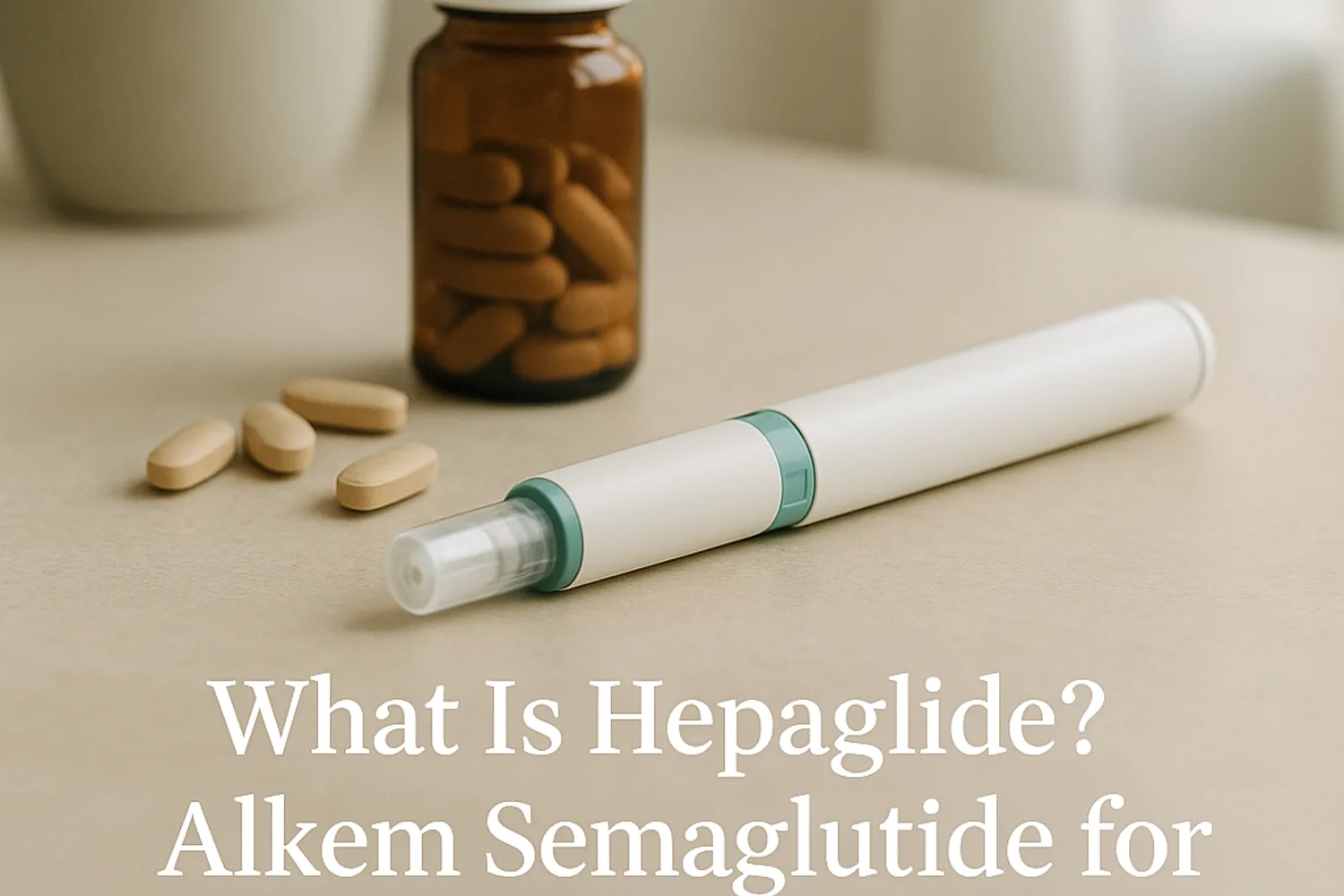
What Is Hepaglide? A Guide to Alkem's Semaglutide for Liver Health
Conversations about metabolic health in India are expanding, moving beyond blood sugar and weight to focus on a vital organ: the liver. A condition called MASH, or metabolic dysfunction-associated steatohepatitis, is a growing concern. In this landscape, a new medication called Hepaglide has emerged, offering a potential therapeutic option.
This guide provides a clear and practical overview of Hepaglide, explaining what it is, how it works, and what you might want to discuss with your doctor. Its purpose is to inform, not to advise. Consult your healthcare provider before starting any medication.
Understanding the Liver Health Challenge: From Fatty Liver to MASH
To understand Hepaglide, it's helpful to first understand the condition it's designed to address. The journey often begins with a condition known as Non-alcoholic Fatty Liver Disease (NAFLD).
What is NAFLD?
NAFLD is characterized by the accumulation of excess fat in the liver cells of people who drink little to no alcohol. For many, this condition is benign and causes no significant issues. However, for a subset of individuals, it can progress.
The Progression to MASH
MASH (Metabolic dysfunction-associated Steatohepatitis) is a more serious form of NAFLD. The term MASH has recently been adopted to more accurately describe the condition, which was previously known as NASH (Non-alcoholic Steatohepatitis).
In MASH, the excess fat in the liver is accompanied by inflammation and liver cell damage. Over time, this inflammation and damage can lead to fibrosis (scarring) of the liver. This scarring can impair liver function and, in advanced cases, lead to cirrhosis or other serious complications. Because it often has no obvious symptoms in its early stages, it's often called a "silent" disease.
What Exactly Is Hepaglide?
Hepaglide is the brand name for a medication from Alkem Laboratories that has been approved in India for the treatment of MASH.
The active ingredient in Hepaglide is semaglutide. This might sound familiar, as semaglutide is also the active ingredient in other medications used for managing type 2 diabetes and for weight management. What makes Hepaglide noteworthy is its specific indication for addressing liver health, particularly MASH. It belongs to a class of medications known as GLP-1 (glucagon-like peptide-1) receptor agonists.
How Does Semaglutide Work for Liver Health?
To grasp how Hepaglide functions, we need to look at the role of the GLP-1 hormone, which our bodies produce naturally.
The Power of GLP-1
GLP-1 is an incretin hormone released by our gut after we eat. It plays several important roles in our metabolism:
- It stimulates insulin secretion: This helps lower blood sugar levels after a meal.
- It suppresses glucagon production: Glucagon is a hormone that tells the liver to release stored sugar, so suppressing it helps keep blood sugar in check.
- It slows down gastric emptying: The stomach takes longer to empty its contents, which can help you feel full for longer.
- It acts on the brain: It signals feelings of satiety, or fullness, which can help reduce overall appetite and calorie intake.
Semaglutide is a GLP-1 receptor agonist, meaning it mimics the action of our natural GLP-1 hormone, but it is designed to last much longer in the body.
The Connection to the Liver
The benefits for a liver with MASH are thought to be both indirect and direct.
Indirectly, by helping to improve blood sugar control and supporting weight loss, semaglutide reduces the overall metabolic burden on the body. Less metabolic stress often means less fat being deposited in the liver, which is a key driver of MASH.
Directly, research suggests that GLP-1 receptor agonists may also have anti-inflammatory effects within the liver itself. By potentially reducing inflammation and cellular stress, the medication may help slow down or even reverse the liver damage and fibrosis associated with MASH.
Who Might Be a Candidate for Hepaglide?
The decision to use any prescription medication is one made exclusively between a patient and their doctor. Hepaglide is specifically indicated for individuals who have been diagnosed with MASH.
A diagnosis of MASH is not made lightly. It typically involves a thorough evaluation by a healthcare professional, which may include:
- Blood tests to check for elevated liver enzymes.
- Imaging studies like an ultrasound or a specialized test called a FibroScan to assess fat in the liver and the degree of stiffness or scarring.
- In some cases, a liver biopsy may be performed to examine a small piece of liver tissue under a microscope to confirm the diagnosis and stage the disease.
Hepaglide is intended to address the inflammation and damage of MASH, not just the simple accumulation of fat seen in early-stage NAFLD.
What to Discuss With Your Doctor
If you have been diagnosed with MASH, having an open and informed conversation with your doctor is the most important step. Here are some key areas you might want to cover.
Your Overall Health Picture
Be sure to discuss your complete medical history. This includes any other conditions you may have, such as type 2 diabetes, kidney disease, or a history of pancreatitis. Provide a full list of all other medications, vitamins, and supplements you are currently taking to avoid any potential interactions.
Understanding Potential Side Effects
Like all medications, those in the GLP-1 class can have side effects. The most common are gastrointestinal in nature, including nausea, diarrhoea, vomiting, and constipation. Ask your doctor about what to expect, how these side effects are typically managed, and when you should report them.
Hepaglide's Role in Your Broader Treatment Plan
Medication is rarely a standalone solution. MASH is a metabolic condition, and lifestyle remains the cornerstone of its management. Discuss with your doctor how Hepaglide fits into a comprehensive plan that includes nutrition, physical activity, and weight management. A platform like WeightEasy can provide resources on lifestyle, but your medical plan must come from your doctor.
The Foundation: Lifestyle and Liver Health
It is crucial to remember that medications like Hepaglide are designed to work alongside, not replace, fundamental lifestyle efforts. A healthy, balanced diet, regular physical activity, and maintaining a healthy weight are essential for managing MASH and promoting overall liver health. These efforts help reduce liver fat, improve insulin sensitivity, and lower inflammation.
Hepaglide represents an important development in the medical management of MASH in India, offering a targeted tool for doctors and patients navigating this complex condition. As with any medical treatment, understanding what it is and how it works is the first step toward having a productive conversation with your healthcare team.
Consult your healthcare provider before starting any medication.
Sources
- The New England Journal of Medicine: Trial of Semaglutide in Non-alcoholic Steatohepatitis (https://www.nejm.org/doi/full/10.1056/NEJMoa2028395)
- The Economic Times: Alkem launches India's first drug for NASH, Hepaglide (https://health.economictimes.indiatimes.com/news/pharma/alkem-launches-indias-first-drug-for-nash-hepaglide/109935100)
- Business Standard: Alkem launches Hepaglide, the first novel drug in India for Non-alcoholic Steatohepatitis (NASH) (https://cdsco.gov.in/opencms/opencms/en/Home/)
- National Institute of Diabetes and Digestive and Kidney Diseases (NIDDK): Definition & Facts of NAFLD & NASH (https://www.niddk.nih.gov/health-information/liver-disease/nafld-nash)
- The Lancet Gastroenterology & Hepatology: A multi-society Delphi consensus statement on new fatty liver disease nomenclature (https://www.thelancet.com/journals/langas/article/PIIS2468-1253(23)00177-4/fulltext)
Written by
Dietician / Nutritionist
Health Content Writer
Kritika singh is a Dietician / Nutritionist professional who contributes evidence-informed health and wellness content for WeightEasy.
View profile →Reviewed by
Dietician / Nutritionist, Phd scholar
Senior Medical Reviewer
Nishat Anjum is a Dietician / Nutritionist, Phd scholar professional who reviews WeightEasy health content for medical and editorial accuracy.
View profile →