
Does Ozempic Reduce Alcohol Cravings? What the Research Shows
Many GLP-1 users report reduced desire to drink alcohol. Here is what the science says about why this happens and what clinical trials are studying.
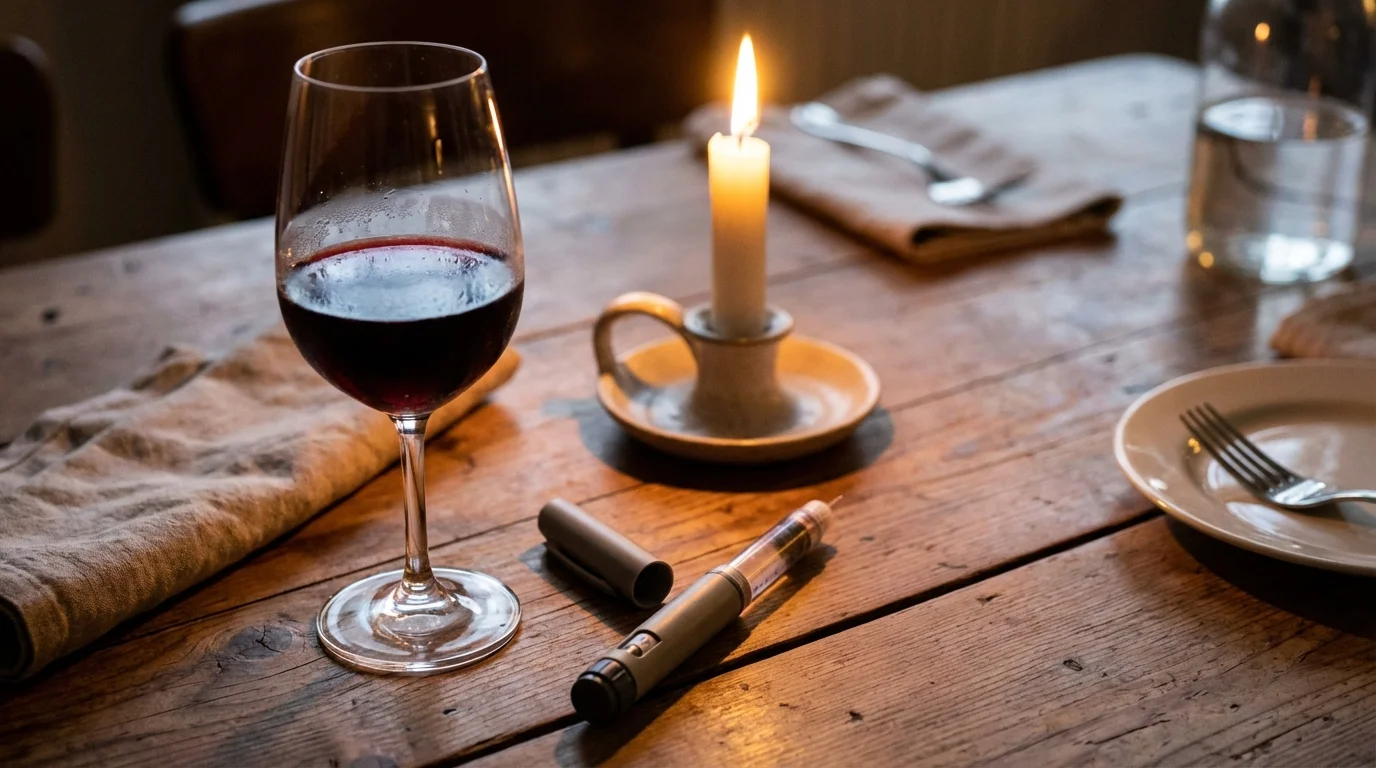
One of the more unexpected observations among GLP-1 users has nothing to do with weight. Many people taking Ozempic, Wegovy, Mounjaro, or Zepbound report a significant reduction in their desire to drink alcohol — without trying, without being told to expect it, and sometimes to their own surprise.
The reports are consistent enough, and widespread enough, that researchers are now studying this effect formally. Here is what the science shows, why it happens, and what it means for patients.
What are patients reporting?
Across online communities, clinical conversations, and published case reports, a recurring pattern emerges. People on GLP-1 therapy describe:
- Finding alcohol less appealing than before
- Stopping at one or two drinks where they previously would have had more
- Losing interest in drinking altogether, even in social situations
- Feeling like the desire to drink has simply "gone quiet"
- No longer craving alcohol on occasions that previously triggered it
The effect is not universal. Not everyone on GLP-1 therapy notices a change in alcohol desire. But the pattern is consistent enough across thousands of independent reports — from people who had no expectation of this effect — to take seriously.
What makes these reports particularly credible is that they were largely unsolicited. Patients were not asked about alcohol in clinical trials for weight loss. They volunteered the observation spontaneously.
Why might GLP-1 drugs affect alcohol desire?
The mechanism is not fully proven yet, but researchers have a well-supported leading hypothesis rooted in neuroscience.
GLP-1 receptors in the brain's reward system
GLP-1 receptors are not only found in the gut and pancreas. They are also present in areas of the brain that regulate reward, motivation, and habitual behaviour — including:
- Nucleus accumbens: The brain's primary reward hub, central to pleasure, motivation, and craving
- Ventral tegmental area (VTA): Produces dopamine signals that reinforce rewarding behaviours
- Prefrontal cortex: Involved in impulse control and decision-making
- Hypothalamus: Regulates appetite and reward-related eating behaviour
Alcohol activates these reward pathways. It triggers dopamine release in the nucleus accumbens, producing the pleasurable and reinforcing effects that underlie alcohol's addictive potential.
When GLP-1 receptors in these regions are activated by GLP-1 medications, the reward signal associated with drinking appears to be dampened — the response is blunted, less reinforcing, less motivating.
Dopamine modulation: the core mechanism
Animal studies have consistently shown that GLP-1 receptor agonists reduce the dopamine release triggered by alcohol consumption in the nucleus accumbens. The sequence:
- Alcohol enters the system
- Normally triggers dopamine surge → pleasurable feeling → reinforcement → craving
- With GLP-1 receptor activation → dopamine response is reduced → less pleasure from the same amount of alcohol → less craving
Reduced dopamine response means reduced behavioural reinforcement. The brain learns less strongly that "alcohol = reward." Over time, the craving weakens.
Does food craving reduction generalise?
The same mechanism that reduces appetite for high-calorie food appears to reduce appetite for other reward-driven behaviours. This is consistent across multiple reports and aligns with the neuroscience.
Many GLP-1 users also report reduced cravings for:
- Gambling
- Shopping or online spending
- Nicotine
- Compulsive eating beyond hunger
- Social media or screen use
This fits a model of general reward system dampening rather than a specific anti-alcohol effect. GLP-1 medications may be reducing the brain's baseline sensitivity to all reward signals — a finding with broad implications beyond weight management.
What does the formal research show?
Patient anecdotes prompted serious scientific investigation. The research is now catching up.
Large-scale observational data
Several analyses of insurance claims databases and electronic health records have compared GLP-1 users with matched controls on other diabetes or weight loss medications.
The consistent finding: people on GLP-1 medications have significantly lower rates of alcohol-related hospital admissions, diagnoses of alcohol use disorder, and alcohol-related adverse events compared to people on alternative medications with similar baseline characteristics.
These are not randomised controlled trials, so causation cannot be confirmed. But the signal is consistent across multiple independent datasets and large patient populations.
Clinical trials for alcohol use disorder (AUD)
The observational data was compelling enough to prompt formal clinical trials.
Klausen et al. (2022) — JCI Insight: A randomised trial evaluating exenatide (an older GLP-1 drug) in patients with alcohol use disorder. Results showed reduced alcohol consumption and fewer heavy drinking days compared to placebo. This was the first controlled trial showing a GLP-1 drug could reduce alcohol use in a clinical AUD population.
Ongoing semaglutide AUD trials: Multiple Phase 2 and Phase 3 trials are now evaluating semaglutide specifically for alcohol use disorder. Key trials include:
- NCT04232761 — semaglutide vs placebo in AUD (results expected 2025–2026)
- Multiple academic centre trials across the US and Europe evaluating dose-response and mechanism
Early results from smaller trials have shown:
- Reduced self-reported alcohol craving scores
- Fewer heavy drinking days per week (heavy drinking defined as 5+ drinks/day for men, 4+ for women)
- Reduced alcohol consumption measured in standard drinks per week
Full Phase 3 results from the formal AUD trials are expected in 2026–2027.
The SELECT cardiovascular trial: a secondary signal
The SELECT trial (NEJM 2023, n=17,604) evaluated semaglutide in people with overweight or obesity and cardiovascular disease. Alcohol use disorder was tracked as an adverse event.
Analysis of the data showed a significantly lower rate of alcohol-related events in the semaglutide group compared to placebo — an incidental finding from a trial that was not designed to study alcohol. This adds to the convergent evidence from multiple independent sources.
Practical considerations for GLP-1 users who drink
Even if you are not concerned about alcohol dependence, GLP-1 therapy changes the practical relationship between you and alcohol in ways worth knowing.
You may feel alcohol more intensely
GLP-1 drugs slow gastric emptying. This affects how quickly everything leaves your stomach — including alcohol. The relationship is complex: some people find alcohol is absorbed slightly more slowly, others find the effects are amplified. The most common report is that alcohol feels stronger on fewer drinks.
The reduction in food intake is also relevant. Eating less while drinking generally increases alcohol's effects on blood sugar and intoxication.
Practical advice: If you drink, start with less than your pre-GLP-1 amount and see how you respond. What used to be "two glasses" before may now feel like three.
Blood sugar effects
For people using GLP-1 drugs for type 2 diabetes (Ozempic, Mounjaro), alcohol carries an additional consideration: it can cause blood sugar to drop, particularly if you are also taking insulin or sulphonylureas. GLP-1 drugs alone have a low hypoglycaemia risk, but combined alcohol effects warrant awareness.
Social situations
Many patients find that reduced alcohol desire is actually welcome. They report feeling "present" at social events without the pull toward drinking that previously made those situations uncomfortable. For people who previously used alcohol to manage social anxiety or stress, this shift can be significant.
For others — particularly those who did not want to drink less — the change can feel surprising or unwanted. If that is you, it is worth discussing with your doctor.
Does this apply to other substances?
Early research and observational data suggest the GLP-1 reward-dampening mechanism may extend to:
Nicotine: Several reports and small studies suggest GLP-1 users smoke less. Formal smoking cessation trials for semaglutide are now underway.
Opioids: Animal studies show GLP-1 receptor activation reduces opioid-seeking behaviour. Human trials are in early stages.
Cannabis: Limited data, but case reports describe reduced cannabis use in GLP-1 users.
Compulsive behaviours: The broader reward dampening effect (gambling, compulsive buying) is consistent with the mechanism but has not been formally studied.
The common thread is dopamine-mediated reward. If GLP-1 activation broadly reduces the brain's sensitivity to reward signals, its potential applications extend well beyond obesity and diabetes.
Is this an approved use?
No. Ozempic, Wegovy, Mounjaro, and Zepbound are not approved for alcohol use disorder or addiction treatment. These drugs are approved for type 2 diabetes and/or chronic weight management.
Using them for AUD is investigational. If you are concerned about alcohol use, speak directly with your doctor. There are already approved, effective treatments for alcohol use disorder — including naltrexone, acamprosate, and disulfiram — that your doctor can discuss and prescribe.
GLP-1 therapy may one day have a formal role in addiction medicine. Right now, that evidence is building but not complete.
Tracking changes in alcohol desire on GLP-1 therapy
If you are on GLP-1 therapy and notice changes in your relationship with alcohol — positive or negative — it is worth noting:
- When the change appeared relative to starting or increasing your dose
- Whether desire has reduced, stayed the same, or changed in character
- Whether social situations feel different
- Any changes in how alcohol affects you physically (stronger? different timing?)
These observations are clinically useful and, increasingly, of genuine interest to researchers. Keeping a consistent record of your GLP-1 experience — including these unexpected effects — helps build the full picture of how the medication is working for you.
Final takeaway
Many GLP-1 users experience reduced alcohol cravings, likely because these medications activate reward-related GLP-1 receptors in the brain and reduce dopamine-mediated reinforcement of drinking behaviour. Formal clinical trials are underway and early results are encouraging.
This is not an approved use, but it is a real effect that researchers are taking seriously. The broader implication — that GLP-1 drugs may reduce reward-seeking behaviour across multiple domains — is one of the most interesting developments in metabolic medicine.
If you notice changes in your relationship with alcohol on GLP-1 therapy, whether welcome or not, it is worth discussing with your healthcare provider.
Related Articles
- Long-Term Safety of Semaglutide: What the Evidence Shows
- GLP-1 Weight Loss Plateau: What to Do
- What Happens When You Stop Ozempic?
Consult your healthcare provider about any concerns regarding alcohol use.
Consult your healthcare provider before starting any medication.
Sources
- Ozempic prescribing information: https://www.accessdata.fda.gov/drugsatfda_docs/label/2025/209637s025lbl.pdf
- Wegovy prescribing information: https://www.accessdata.fda.gov/drugsatfda_docs/label/2024/215256s011lbl.pdf
- MedlinePlus — semaglutide: https://medlineplus.gov/druginfo/meds/a618008.html
- STEP 1 semaglutide trial — PubMed: https://pubmed.ncbi.nlm.nih.gov/33567185/
FAQ
Does Ozempic reduce alcohol cravings?
Many GLP-1 users report reduced desire for alcohol. While this is not an approved use, emerging research suggests GLP-1 receptors in the brain''s reward system may explain the effect. Formal clinical trials are underway.
Can I drink alcohol on Ozempic?
Alcohol is not formally contraindicated with Ozempic or semaglutide, but there are practical considerations. GLP-1 drugs slow gastric emptying, which can change how quickly alcohol is absorbed. Many users report increased sensitivity to alcohol - it affects them more quickly or strongly than before. Moderation is advisable.
Is Ozempic being studied for alcohol use disorder?
Yes. Multiple clinical trials are evaluating semaglutide and other GLP-1 medications specifically for alcohol use disorder and other addictive behaviours. Results from early trials are promising.
Why does Ozempic reduce cravings for food, alcohol, and other things?
GLP-1 receptors are not only in the gut and pancreas - they are also found in areas of the brain associated with reward, motivation, and compulsive behaviour. Activating these receptors appears to reduce the reward signal that drives cravings for high-calorie food, alcohol, and possibly other addictive substances.
Does Ozempic affect how alcohol feels?
Many users report feeling the effects of alcohol more intensely on GLP-1 medications — getting intoxicated faster or on less alcohol than before. This is likely related to reduced food intake and changes in gastric emptying that affect alcohol absorption. Be cautious about your usual drinking amounts.
Can GLP-1 drugs be used to treat addiction beyond alcohol?
This is an active area of research. Early reports and small trials suggest potential effects on cravings for nicotine, opioids, and even gambling and compulsive behaviours. The underlying mechanism — dampening of the brain''s reward response — may be broadly relevant. Formal trials for non-alcohol addiction applications are underway.
Should I use Ozempic specifically to stop drinking?
No. Ozempic is not approved for alcohol use disorder. There are already approved, effective treatments for alcohol use disorder that your doctor can discuss. If alcohol use is a concern for you, raise it directly with your healthcare provider.
Written by
Masters in Microbiology
Health Content Writer
Anuja Akkar is a Masters in Microbiology professional who contributes evidence-informed health and wellness content for WeightEasy.
View profile →Reviewed by
Dietician / Nutritionist
Senior Medical Reviewer
Dt Neha is a Dietician / Nutritionist professional who reviews WeightEasy health content for medical and editorial accuracy.
View profile →