
Can GLP-1 Drugs Prevent Type 2 Diabetes?
Tirzepatide reduced the risk of developing type 2 diabetes by 94% in adults with prediabetes in a 3-year clinical trial. Here is what that means for patients.
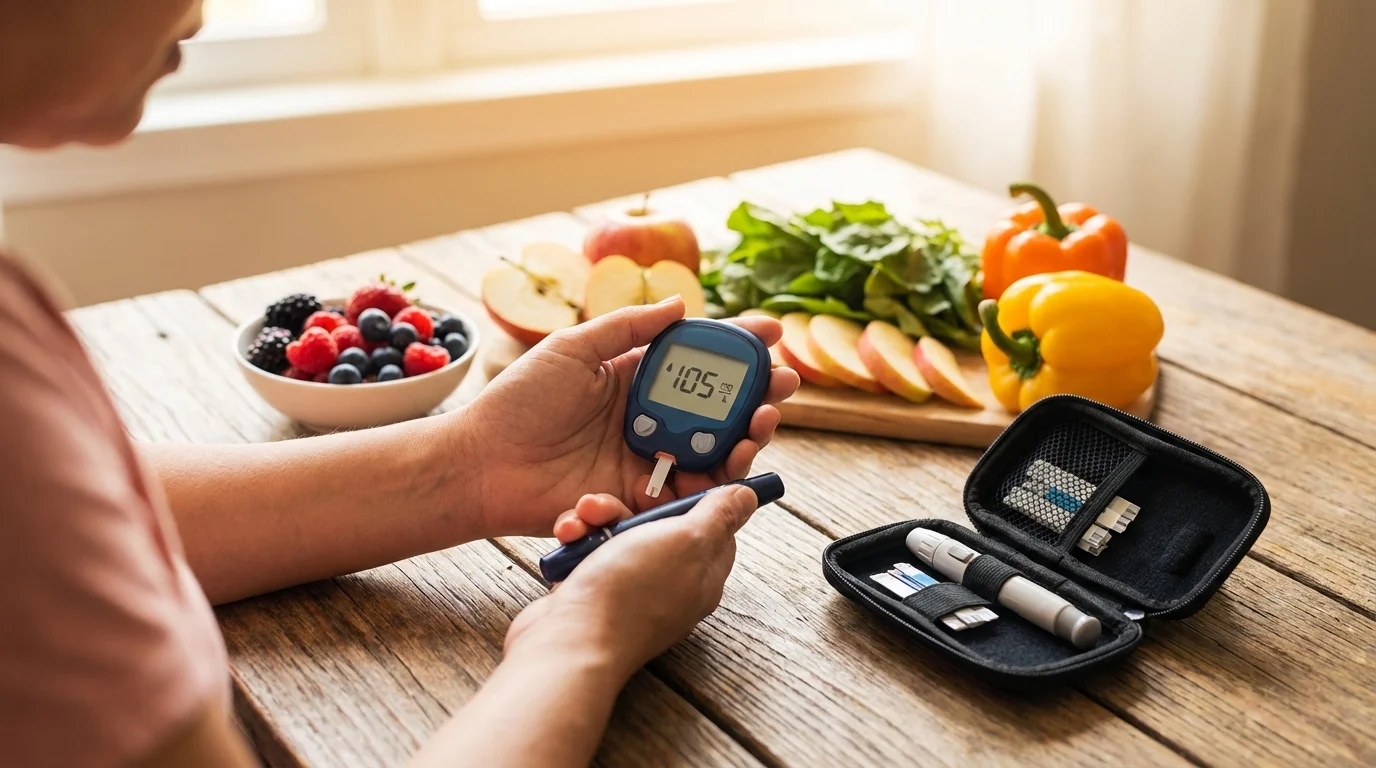
Prediabetes affects an enormous number of people — approximately 96 million adults in the United States alone, and hundreds of millions more worldwide. Most receive lifestyle advice and monitoring. Very few receive medication specifically aimed at stopping progression to type 2 diabetes.
Data from a 3-year extension of the SURMOUNT-1 clinical trial changes that conversation significantly. The results are among the most striking in modern metabolic medicine.
Understanding prediabetes: why it matters
Prediabetes is defined by blood sugar levels that are elevated above normal but not yet high enough to meet the diagnostic threshold for type 2 diabetes. It is diagnosed using:
- Fasting plasma glucose: 100–125 mg/dL (5.6–6.9 mmol/L)
- HbA1c: 5.7–6.4%
- 2-hour glucose tolerance test: 140–199 mg/dL
The condition is often silent. Many people with prediabetes have no symptoms and are unaware of their diagnosis. But without intervention, the trajectory is concerning:
- Without action, approximately 15–30% of people with prediabetes will develop type 2 diabetes within 5 years
- Over 10 years, up to 70% may progress if nothing changes
- Cardiovascular risk increases even before the diabetes threshold is crossed
- Complications including kidney disease and nerve damage can begin developing during the prediabetes phase
Insulin resistance is the core mechanism. The body's cells do not respond normally to insulin, forcing the pancreas to work harder. Over time, the pancreatic beta cells that produce insulin become exhausted — and blood sugar control deteriorates further.
The earlier this process is interrupted, the better the long-term outcome.
What is the SURMOUNT-1 trial?
SURMOUNT-1 was Eli Lilly's pivotal Phase 3 clinical trial for tirzepatide as a weight management drug. It enrolled 2,539 adults with obesity and no diabetes, and ran for 72 weeks.
The main trial results, published in the New England Journal of Medicine in 2022, showed remarkable weight loss:
- Average 22.5% body weight loss at the 15 mg dose
- About 57% of participants achieved 20% or more weight loss
But the story of prediabetes prevention came from a specific subset of participants and an extension of the trial timeline.
What the 3-year extension found
Of the 2,539 SURMOUNT-1 participants, 1,032 had prediabetes at the start of the trial. Eli Lilly extended follow-up for this group to 176 weeks (approximately 3.4 years) specifically to measure whether tirzepatide could prevent progression to type 2 diabetes.
Results were announced in August 2024.
The headline finding:
Tirzepatide reduced the risk of progressing from prediabetes to type 2 diabetes by 94% compared to placebo over 176 weeks.
This is not a modest effect. It is one of the largest risk reductions ever recorded for any metabolic intervention in a clinical trial.
Full results by dose
| Dose | Weight loss at 176 weeks | Progression to T2D (vs placebo) |
|---|---|---|
| 5 mg | 15.4% | Included in 94% pooled result |
| 10 mg | 19.9% | Included in 94% pooled result |
| 15 mg | 22.9% | Included in 94% pooled result |
| Placebo | 2.1% | Reference group |
In absolute terms: 1.3% of tirzepatide participants developed type 2 diabetes during the trial, compared to 13.3% in the placebo group.
After stopping the medication (17-week follow-up), the risk reduction fell to 88%, suggesting some protection persisted briefly but that continued treatment is needed to maintain the benefit.
Putting this in context: how does it compare to other options?
The Diabetes Prevention Program (DPP)
The DPP, the landmark 1990s US trial that established the gold standard for prediabetes management, showed:
- Lifestyle intervention (diet + exercise): 58% risk reduction over 3 years
- Metformin: 31% risk reduction over 3 years
Tirzepatide's 94% reduction more than doubles even the lifestyle intervention result. This is not because lifestyle changes do not work — they clearly do. It is because tirzepatide produces far more weight loss than any lifestyle programme has consistently achieved in large populations, and because it has direct metabolic effects beyond weight loss alone.
Why does this comparison matter?
The DPP lifestyle programme requires intensive coaching, sustained dietary change, and regular exercise at a level most people do not maintain long-term. In real-world settings, the benefit is smaller than in clinical trials. Metformin is inexpensive and widely used, but its risk reduction is modest.
For high-risk individuals — those with prediabetes, obesity, and other metabolic risk factors — tirzepatide may offer a substantially more effective pharmacological option than anything previously available.
Why does tirzepatide have such a large effect on diabetes risk?
The mechanism works on several levels simultaneously.
Weight loss reduces insulin resistance at its root
Visceral fat — the fat stored around the organs in the abdomen — is the primary driver of insulin resistance. Reducing total body weight by 15–23% dramatically reduces visceral fat, allowing cells to respond to insulin normally again. When insulin resistance decreases, the pancreatic beta cells no longer have to overwork — and the progression toward diabetes slows or reverses.
Tirzepatide's dual mechanism adds metabolic benefit beyond weight
Tirzepatide activates both GLP-1 and GIP receptors. GLP-1 activation:
- Stimulates insulin secretion from the pancreas in a glucose-dependent way
- Suppresses glucagon (which raises blood sugar)
- Slows gastric emptying, smoothing post-meal glucose spikes
GIP activation adds:
- Enhanced insulin secretion
- Potential direct effects on fat metabolism and adipose tissue function
Together, these effects give the pancreatic beta cells a chance to recover and function more effectively — which may explain why some participants maintained reduced diabetes risk even briefly after stopping the drug.
Restoration of glycaemic control
As weight falls and insulin resistance improves, fasting glucose and HbA1c move back into the normal range. Some participants in the trial who had prediabetes at baseline showed HbA1c returning to fully normal levels during treatment.
What this means for patients with prediabetes
If you have prediabetes and obesity or overweight, this data is directly relevant to your situation. It adds to an already compelling set of reasons to discuss GLP-1 therapy with your doctor.
Questions to raise at your next appointment
- What is my current HbA1c trend? Is it moving upward over time?
- Given my weight and prediabetes status, would tirzepatide or semaglutide be appropriate?
- What lifestyle changes should accompany any medication?
- Is there insurance coverage for this use, or are self-pay options viable?
- How long should I continue before reassessing?
Setting realistic expectations
The trial used tirzepatide at 5 mg, 10 mg, and 15 mg — all meaningful doses. The benefit was pooled across doses, meaning even the lower 5 mg dose contributed. The weight loss associated with those doses is real: 15–23%. Expecting diabetes prevention without meaningful weight loss is unrealistic.
The drug does the heavy lifting pharmacologically, but supporting it with better food choices, adequate hydration, sleep, and movement amplifies the benefit.
What about semaglutide (Ozempic/Wegovy)?
Semaglutide has not been studied in a dedicated 3-year prediabetes prevention trial. But the evidence for diabetes risk reduction is growing:
- The SELECT cardiovascular outcomes trial (NEJM 2023, n=17,604) showed semaglutide significantly reduced the incidence of diabetes in participants with overweight or obesity and cardiovascular disease
- Sub-analyses from multiple semaglutide trials consistently show HbA1c and fasting glucose reduction in people with prediabetes at baseline
- Formal prediabetes prevention trials for semaglutide are likely underway
The biological rationale is the same as for tirzepatide — GLP-1 activation, weight loss, and insulin sensitivity improvement — though the dual GIP/GLP-1 mechanism of tirzepatide may offer additional benefit.
Tracking prediabetes markers on GLP-1 therapy
If you are on GLP-1 therapy and have prediabetes, your regular blood tests tell the story beyond weight loss.
Key markers to track:
| Marker | Normal | Prediabetes | Diabetes |
|---|---|---|---|
| HbA1c | < 5.7% | 5.7–6.4% | ≥ 6.5% |
| Fasting glucose | < 100 mg/dL | 100–125 mg/dL | ≥ 126 mg/dL |
| Fasting insulin | 2–25 µIU/mL | Elevated with resistance | Varies |
| HOMA-IR | < 1.9 | > 2.9 suggests resistance | — |
Check HbA1c and fasting glucose every 3–6 months while on GLP-1 therapy. A consistent downward trend confirms the medication is working metabolically — not just on the scale.
Keeping a systematic log of your medication history, dose changes, and these blood results makes it far easier to correlate changes and communicate progress to your doctor.
Final takeaway
A 3-year extension of the SURMOUNT-1 trial showed tirzepatide reduced the risk of prediabetes progressing to type 2 diabetes by 94% — a landmark result that substantially outperforms lifestyle intervention alone and far exceeds metformin.
Using GLP-1 drugs specifically for prediabetes prevention is currently off-label. But the data is compelling enough that it warrants a detailed conversation with your doctor, especially if you have prediabetes alongside overweight or obesity.
Consult your healthcare provider before starting any medication.
Sources
- Mounjaro prescribing information: https://www.accessdata.fda.gov/drugsatfda_docs/label/2025/215866s034lbl.pdf
- Zepbound prescribing information: https://www.accessdata.fda.gov/drugsatfda_docs/label/2024/217806s003lbl.pdf
- MedlinePlus — tirzepatide: https://medlineplus.gov/druginfo/meds/a622044.html
- SURMOUNT-1 tirzepatide trial — PubMed: https://pubmed.ncbi.nlm.nih.gov/35658024/
Related Articles
-
Knowler WC, et al. Reduction in the incidence of type 2 diabetes with lifestyle intervention or metformin. N Engl J Med. 2002;346:393–403 (Diabetes Prevention Program)
-
Lincoff AM, et al. Semaglutide and cardiovascular outcomes in obesity without diabetes (SELECT). N Engl J Med. 2023;389:2221–2232
-
Zepbound (tirzepatide) Prescribing Information — Eli Lilly and Company
-
CDC Prediabetes statistics: cdc.gov/diabetes/prevention
-
Tirzepatide FDA history: drugs.com/history/zepbound.html
FAQ
Can Ozempic or Mounjaro prevent type 2 diabetes?
Clinical trial evidence is strong for tirzepatide (Mounjaro/Zepbound). A 3-year SURMOUNT-1 extension showed tirzepatide reduced the risk of progression from prediabetes to type 2 diabetes by 94% compared to placebo. Semaglutide data also shows risk reduction, though the trial specifically using GLP-1 for prediabetes was done with tirzepatide.
Is Mounjaro or Ozempic approved for prediabetes?
Not specifically. GLP-1 medications are approved for type 2 diabetes (Ozempic, Mounjaro) and obesity (Wegovy, Zepbound). Using them specifically for prediabetes prevention is off-label, though the clinical evidence is compelling.
How long do you have to take GLP-1 for diabetes prevention?
In the SURMOUNT-1 trial, participants took tirzepatide for 176 weeks (approximately 3.4 years). When the drug was stopped, diabetes risk began to return - suggesting the benefit requires continued treatment.
What is prediabetes?
Prediabetes is a condition where blood sugar levels are higher than normal but not yet high enough to be classified as type 2 diabetes. HbA1c of 5.7–6.4% or fasting glucose of 100–125 mg/dL typically indicates prediabetes. It affects approximately 96 million American adults.
How does tirzepatide compare to metformin for diabetes prevention?
In the Diabetes Prevention Program, metformin reduced diabetes risk by 31% over 3 years. Lifestyle intervention reduced it by 58%. Tirzepatide in the SURMOUNT-1 extension reduced it by 94% — substantially more than either of these established options. However, tirzepatide is significantly more expensive and is not yet approved specifically for this use.
What blood tests should I ask for if I think I might have prediabetes?
Ask for a fasting plasma glucose test and HbA1c. Fasting glucose of 100–125 mg/dL or HbA1c of 5.7–6.4% indicates prediabetes. Your doctor may also run a full lipid panel and insulin level to assess the broader metabolic picture.
Written by
Dietician / Nutritionist
Health Content Writer
Kriti Agarwal is a Dietician / Nutritionist professional who contributes evidence-informed health and wellness content for WeightEasy.
View profile →Reviewed by
Ph. D in Food Science and Nutrition
Senior Medical Reviewer
Dr. Shunmukha Priya. S is a Ph. D in Food Science and Nutrition professional who reviews WeightEasy health content for medical and editorial accuracy.
View profile →