
What to Eat on GLP-1 If You Follow an Indian Diet
Explore dietary options compatible with GLP-1 treatments while following an Indian diet including staples like rice, roti, and dal.
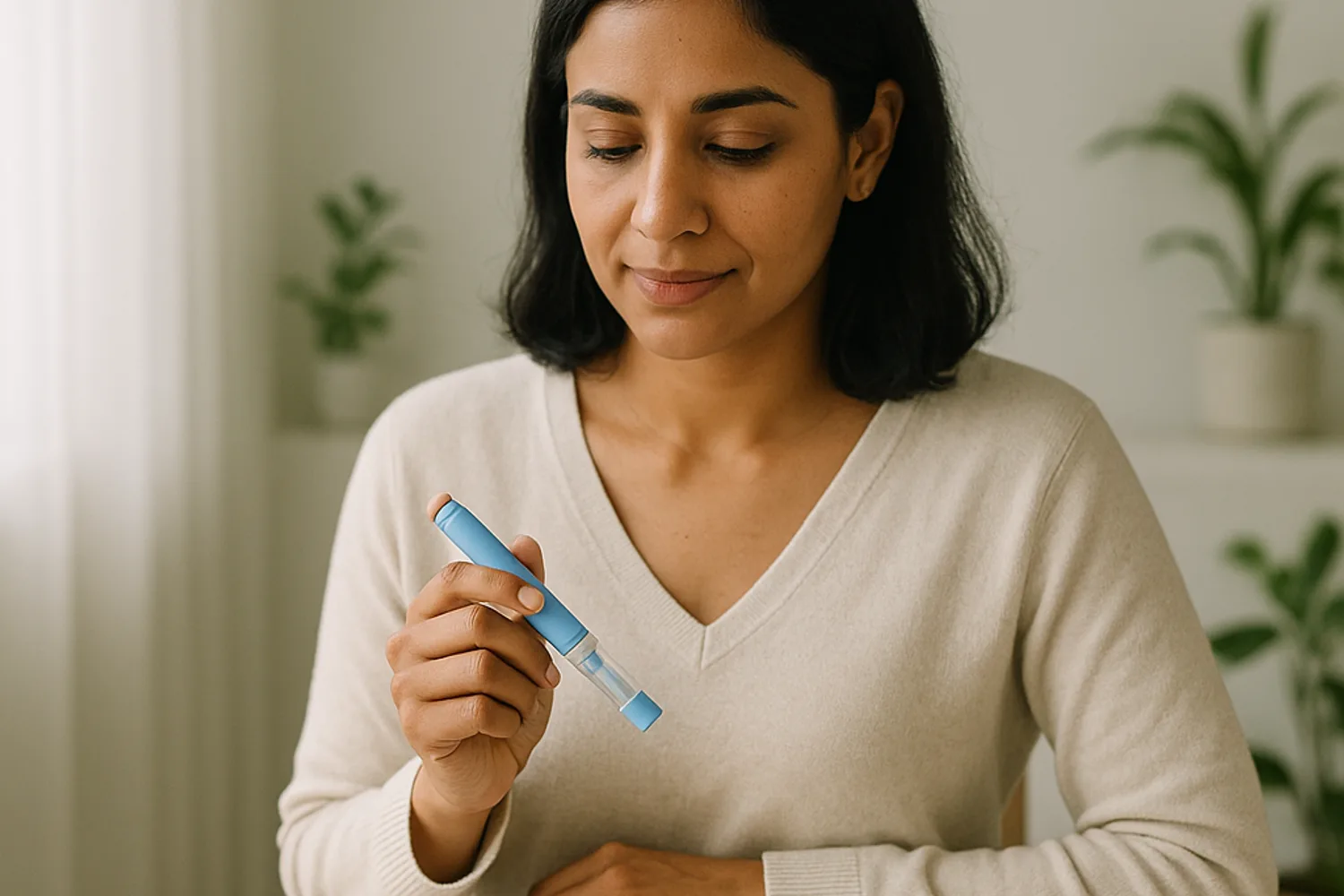
What to Eat on GLP-1 If You Follow an Indian Diet
GLP-1 medications are becoming a more common tool for weight management, and with this comes an important question for many in India: "How do I make this work with my food? Do I have to give up roti, rice, and dal?"
The good news is that you don't have to abandon the flavours and traditions of the Indian kitchen. An Indian diet, rich in plant-based proteins, fibre-rich vegetables, and whole grains, can be incredibly well-suited for someone on a GLP-1. It’s not about restriction, but about rebalancing your plate to work with how these medications affect your body.
This guide offers practical, evidence-aware suggestions on how to adapt your daily meals. It is designed to help you feel your best while navigating your health journey. Consult your healthcare provider before starting any medication.
Understanding How GLP-1s Change Your Appetite
Before we talk about food, it’s helpful to understand what GLP-1 medications do. In simple terms, they work with your body’s natural hormones to help you feel full faster and stay full for longer. They slow down the rate at which your stomach empties, which is a key reason for the increased feeling of satiety.
This means your internal signals for hunger and fullness will change. You might find that a single roti is as satisfying as two used to be, or that you feel full halfway through a meal that you once finished easily. The goal is to listen to these new signals and adjust your portions accordingly, focusing on nutrient-dense foods to nourish your body even as you eat less.
Building Your Balanced Indian Plate on a GLP-1
The "balanced plate" method is a simple and powerful visual tool. Imagine your plate divided into sections. On a GLP-1, you’ll want to adjust the proportions to support muscle health, digestion, and steady energy levels.
H3: Prioritise Protein: The Foundation of Your Meal
Protein is your most important nutrient during weight loss. It helps you preserve muscle mass, which is crucial for a healthy metabolism. It also contributes significantly to the feeling of fullness.
On a GLP-1, making protein the star of your meal is a winning strategy.
- Excellent Indian Sources: Lentils (dal), chickpeas (chana), kidney beans (rajma), paneer, tofu, soya chunks, eggs, chicken, and fish are all fantastic options.
- Practical Tips:
- Start your meal with the protein component. Eat your dal, chicken curry, or paneer sabzi first.
- Ensure every main meal has a significant protein source. A lunch of just sabzi and roti may not be satisfying enough. Add a katori of dal or a side of curd (dahi).
- For vegetarians, combining dals and grains (like dal with rice or roti) creates a complete protein profile.
H3: Embrace Fibre-Rich Sabzis: For Fullness and Gut Health
Vegetables are packed with fibre, vitamins, and minerals. Fibre adds bulk to your meals, helping you feel full with fewer calories. It also plays a vital role in supporting healthy digestion, which can sometimes be a concern as GLP-1s slow down your system.
- Abundant Choices: Think of bhindi (okra), gobi (cauliflower), palak (spinach), baingan (eggplant), lauki (bottle gourd), and leafy greens.
- Practical Tips:
- Aim to fill half of your plate with non-starchy vegetables.
- Don’t be afraid to have a second helping of sabzi instead of another roti or more rice.
- A simple kachumber salad (cucumber, tomato, onion) with your meal is an easy way to boost fibre and freshness.
H3: Smartly Manage Carbohydrates: For Sustained Energy
This is often the biggest area of concern. Can you still eat rice and roti? Absolutely. The key is portion size and the type of carbohydrate you choose. Since your appetite is reduced, you will naturally need less.
- Focus on Complex Carbs: Whole wheat (atta) for rotis and brown or unpolished rice are better choices than maida or white rice. They contain more fibre, which slows down digestion and provides a more gradual release of energy.
- Explore Other Grains: Millets like jowar, bajra, and ragi are excellent, nutrient-dense alternatives for making rotis or porridge.
- Practical Tips:
- Pay attention to your fullness cues. If you feel satisfied after one roti, stop there.
- Use a small bowl (katori) to serve yourself rice, rather than filling your plate.
- When eating dishes like biryani or poha, load them with vegetables and protein to make the carbohydrate portion more balanced.
H3: Include Healthy Fats: For Flavour and Function
Fats are an essential part of a healthy diet. They are necessary for hormone production and the absorption of certain vitamins. However, very high-fat or greasy foods can be difficult to tolerate on GLP-1s because of slowed digestion.
- Good Sources in Indian Cooking: Ghee, mustard oil, and groundnut oil are good choices for cooking, used in moderation. Nuts, seeds, and avocado are also excellent sources of healthy fats.
- Practical Tips:
- Be mindful of fried foods. You may find that traditionally fried snacks like samosas, pakoras, or bhajis feel very heavy and may cause discomfort or nausea.
- Opt for cooking methods like roasting, grilling, or stir-frying instead of deep-frying.
- A handful of almonds or walnuts makes for a great, satisfying snack.
Key Considerations for Success
Adjusting your diet is just one piece of the puzzle. A few other habits can make your experience smoother and more effective.
H3: Hydration is Non-Negotiable
Staying well-hydrated is always important, but it's especially critical on a GLP-1. Aim to drink plenty of water throughout the day. Unsweetened nimbu pani, coconut water, or buttermilk (chaas) are also great hydrating options.
H3: Eat Slowly and Mindfully
Your body needs time to send the "I'm full" signal to your brain. Since that signal is stronger on a GLP-1, eating slowly is more important than ever. Put your spoon down between bites. Chew your food thoroughly. This practice helps prevent you from accidentally eating past the point of comfortable fullness, which can lead to nausea or discomfort.
H3: Listen to Your Body Above All Else
Your body will give you new and different cues. The goal is to learn this new language of hunger and satiety. Some days you might have a larger appetite than others, and that’s okay. The focus should be on overall patterns and making nourishing choices consistently.
An Indian diet is not something to be overcome; it's a foundation to be built upon. By prioritising protein, filling up on fibre from vegetables, choosing your carbohydrates wisely, and listening to your body, you can successfully integrate a GLP-1 medication into your lifestyle without losing the foods you love.
For personalised guidance, it is always best to work with a qualified professional. Consult your healthcare provider before starting any medication.
Sources
- U.S. National Library of Medicine, MedlinePlus. Semaglutide Injection. https://medlineplus.gov/druginfo/meds/a618008.html
- The Lancet. Efficacy and safety of semaglutide 2·4 mg once a week in adults with overweight or obesity in Japan (STEP 6): a randomised, double-blind, placebo-controlled, phase 3a trial. https://www.thelancet.com/journals/landia/article/PIIS2213-8587(22)00194-7/fulltext
- Cleveland Clinic. GLP-1 Agonists. https://my.clevelandclinic.org/health/treatments/13901-glp-1-agonists
- National Institute of Nutrition. Dietary Guidelines for Indians. https://www.nin.res.in/downloads/DietaryGuidelinesforNINwebsite.pdf
- Mayo Clinic. Nausea & vomiting: When to see a doctor. https://www.mayoclinic.org/symptoms/nausea/basics/when-to-see-doctor/sym-20050736
- The New England Journal of Medicine. Once-Weekly Semaglutide in Adults with Overweight or Obesity. https://pubmed.ncbi.nlm.nih.gov/33567185/
Written by
Dietician / Nutritionist
Health Content Writer
Gunjan pareek is a Dietician / Nutritionist professional who contributes evidence-informed health and wellness content for WeightEasy.
View profile →Reviewed by
BHMS
Senior Medical Reviewer
Dietitian with experience in nutrition counseling, meal planning and promoting healthy lifestyles. Dedicated to help individuals achieve optimal health and well-being through personalized nutrition strategies. Skilled in providing expert guidance for managing conditions like diabetes, weight challenges and Lifestyle management.
View profile →