
Tirzepatide vs Semaglutide: Comparison Guide
Compare tirzepatide and semaglutide for weight loss, highlighting differences and considerations to help inform treatment choices.
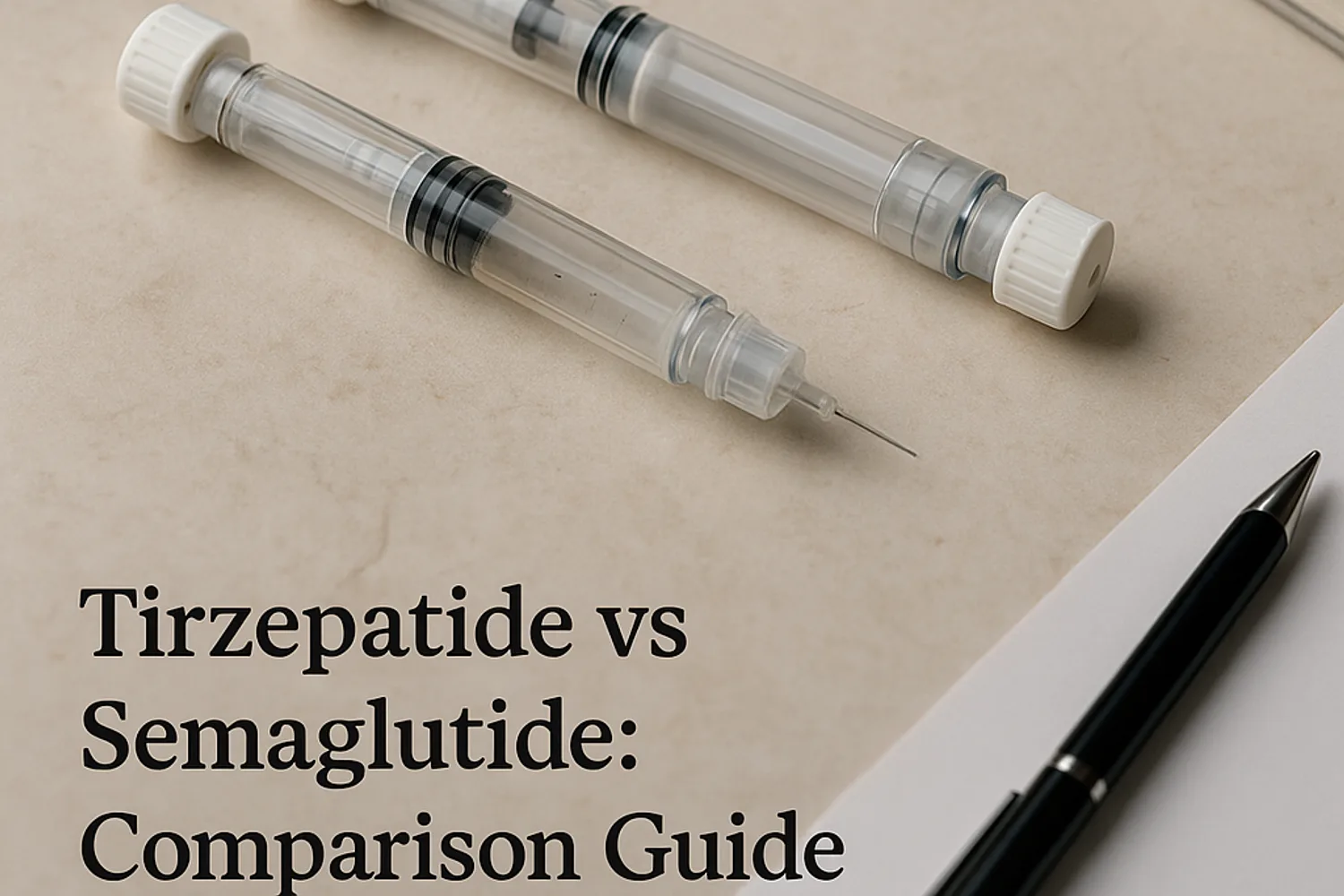
Tirzepatide vs Semaglutide: Comparison Guide
In the world of metabolic health and weight management, two names are generating significant conversation: tirzepatide and semaglutide. Both are prescription medications used to manage type 2 diabetes and, in certain formulations, to support chronic weight management. While they share some similarities, they have a key difference in how they work.
This guide offers a clear, evidence-aware comparison to help you understand these two medications. It is not a substitute for professional medical advice. Consult your healthcare provider before starting any medication.
What Are These Medications?
Both tirzepatide and semaglutide belong to a class of drugs known as incretin mimetics. This means they mimic the action of natural hormones in your gut that are involved in digestion, blood sugar regulation, and appetite.
Semaglutide: The GLP-1 Agonist
Semaglutide is a GLP-1 (glucagon-like peptide-1) receptor agonist. It works by targeting and activating the GLP-1 receptors in your body. This single-hormone action helps to:
- Signal the pancreas to release insulin in response to food, which helps lower blood sugar.
- Slow down gastric emptying, which means food stays in your stomach longer, contributing to a feeling of fullness.
- Communicate with the brain to reduce appetite and food cravings.
Semaglutide is the active ingredient in medications approved for type 2 diabetes (Ozempic) and chronic weight management (Wegovy).
Tirzepatide: The Dual-Action Agonist
Tirzepatide is a newer medication that is unique because it is a dual GIP (glucose-dependent insulinotropic polypeptide) and GLP-1 receptor agonist. It targets two different types of receptors. In addition to activating the GLP-1 pathway like semaglutide, it also activates the GIP pathway.
This dual action is thought to create a more comprehensive effect on the body’s metabolic processes. The GIP action also contributes to blood sugar control and may play a different role in how the body processes and stores energy.
Tirzepatide is the active ingredient in medications approved for type 2 diabetes (Mounjaro) and chronic weight management (Zepbound).
How Do They Work? The Key Difference
The most significant distinction between these two medications lies in their mechanism. Think of it this way: semaglutide targets one important pathway (GLP-1) for managing blood sugar and appetite, while tirzepatide targets two (GLP-1 and GIP).
This dual-hormone approach is the primary reason for the different outcomes observed in clinical studies comparing the two. By engaging both receptors, tirzepatide may have a broader impact on the complex hormonal signaling that governs appetite, fullness, and metabolism.
Comparing Effectiveness: What the Research Shows
When evaluating any medication, it's crucial to look at the results from well-designed clinical trials. Several large-scale studies have compared these two medications, particularly in the context of managing type 2 diabetes and, more recently, for weight management.
For Weight Management
In clinical trials designed to evaluate weight loss in individuals with obesity or who are overweight with related health conditions, tirzepatide has generally been associated with a higher average percentage of body weight loss compared to semaglutide at its highest approved dose for weight management.
The SURMOUNT trial series, which studied tirzepatide for weight management, showed significant weight loss results for participants. When compared to the results from the STEP trials for semaglutide, the average weight loss reported in the tirzepatide studies was greater.
For Blood Sugar Control
In head-to-head trials for managing type 2 diabetes, such as the SURPASS-2 study, tirzepatide was shown to lead to greater reductions in A1c (a measure of average blood sugar over three months) compared to semaglutide.
It’s essential to remember that these are average results from large groups of people in a controlled trial setting. Individual results can and do vary widely based on genetics, lifestyle, adherence to the treatment plan, and other health factors.
Side Effects and Safety Considerations
Because both medications share the GLP-1 mechanism, their side effect profiles are very similar. The most commonly reported side effects are gastrointestinal in nature and include:
- Nausea
- Diarrhea
- Vomiting
- Constipation
- Abdominal pain
- Decreased appetite
These side effects are often most noticeable when first starting the medication or after a dose is increased. For many people, they tend to decrease over time as their body adjusts. Both medications are started at a low dose that is gradually increased over several months to help manage these potential side effects.
Both medications also carry warnings about more serious, though less common, potential risks, such as pancreatitis, gallbladder problems, and a potential risk for a specific type of thyroid tumor. It is vital to discuss your complete personal and family medical history with your doctor to understand these risks in the context of your own health.
Making the Right Choice for You
Choosing between tirzepatide and semaglutide—or any prescription medication—is a decision that can only be made with a qualified healthcare provider. There is no single "best" option for everyone.
A provider will consider several factors to determine the most appropriate course of action for your unique situation, including:
- Your primary health goals: Are you focused more on weight management, blood sugar control, or both?
- Your medical history: This includes any past issues with your pancreas, gallbladder, or thyroid.
- How you tolerate the medication: Some individuals may experience fewer side effects on one than the other.
- Availability and access: Local availability and insurance coverage can also be practical factors in the decision.
Your health journey is personal, and having an open dialogue with a trusted medical professional is the most important step. At WeightEasy, we believe in empowering you with clear information to support these important conversations.
The development of these medications marks a significant advancement in metabolic health. By understanding their similarities and differences, you can be better prepared to discuss your options. Consult your healthcare provider before starting any medication.
Sources
- U.S. Food & Drug Administration. (2023, November 8). FDA Approves New Medication for Chronic Weight Management. https://www.accessdata.fda.gov/drugsatfda_docs/label/2024/217806s003lbl.pdf
- U.S. Food & Drug Administration. (2021, June 4). FDA Approves New Drug Treatment for Chronic Weight Management, First Since 2014. https://www.accessdata.fda.gov/drugsatfda_docs/label/2024/215256s011lbl.pdf
- Jastreboff, A. M., et al. (2022). Tirzepatide Once Weekly for the Treatment of Obesity. The New England Journal of Medicine, 387(3), 205–216. https://pubmed.ncbi.nlm.nih.gov/35658024/
- Frías, J. P., et al. (2021). Tirzepatide versus Semaglutide Once Weekly in Patients with Type 2 Diabetes. The New England Journal of Medicine, 385(6), 503–515. https://www.nejm.org/doi/full/10.1056/NEJMoa2107519
- Wilding, J. P. H., et al. (2021). Once-Weekly Semaglutide in Adults with Overweight or Obesity. The New England Journal of Medicine, 384(11), 989–1002. https://pubmed.ncbi.nlm.nih.gov/33567185/
Written by
Content Writer
Kripa Mishra is a content writer who contributes evidence-informed health and wellness content for WeightEasy.
View profile →Reviewed by
BDS / MDS
Senior Medical Reviewer
Jude Bencia is a BDS / MDS professional who reviews WeightEasy health content for medical and editorial accuracy.
View profile →