
Traveling with GLP-1 Medications: TSA Rules, Cooling, and Packing
Get tips on traveling with GLP-1 medications, including TSA regulations, cooling requirements, and packing advice to support treatment continuity.
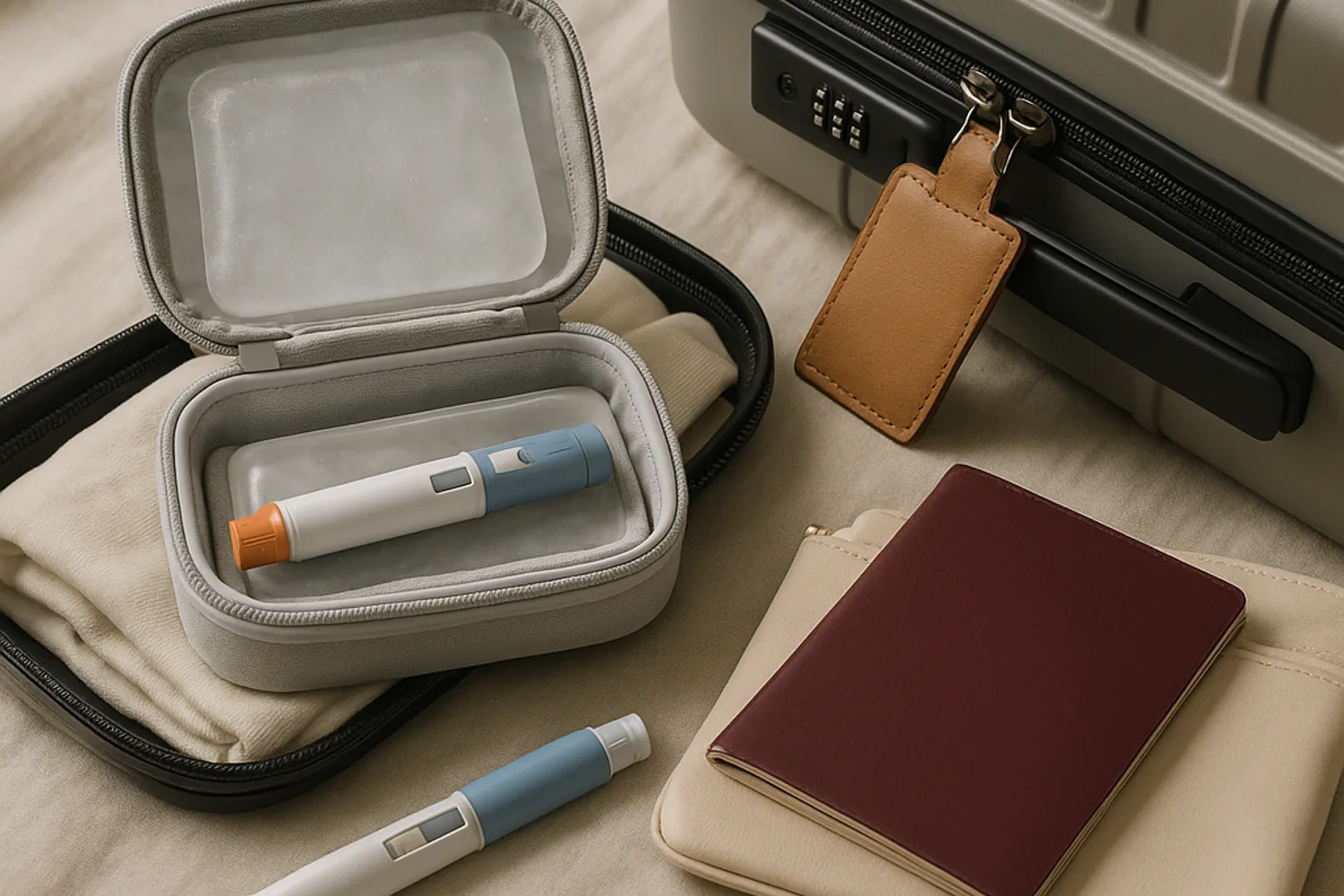
Traveling with GLP-1 Medications: TSA Rules, Cooling, and Packing
Whether you're planning a weekend getaway or a trip around the world, managing your health on the road is a top priority. For the millions of people using GLP-1 medications like Ozempic, Wegovy, or Mounjaro, traveling with injectable pens can seem daunting. The good news is that with a little planning, you can pack your medication securely, navigate airport security with confidence, and enjoy your trip without worry.
This guide provides practical, clear steps for traveling with your GLP-1 medication. It covers everything from TSA regulations and proper cooling to a handy packing checklist. Consult your healthcare provider before starting any medication.
First, Understand Your Medication’s Needs
GLP-1 medications are biologics, which means they are sensitive to temperature. The most important rule is to always read the storage instructions provided by the manufacturer for your specific medication, as guidelines can vary slightly between brands.
Generally, there are two sets of rules for storage:
- Unused Pens: These must be kept refrigerated at a specific temperature range (usually 36°F to 46°F or 2°C to 8°C) until their first use. They should never be frozen.
- In-Use Pens: Once you’ve started using a pen, it can typically be stored at room temperature (usually up to 86°F or 30°C) for a set number of weeks. This is a key detail that makes travel much easier. Check your medication’s instructions to know exactly how long your in-use pen is stable at room temperature.
Knowing these details will help you decide if you need a cooling case or if your in-use pen will be fine for the duration of your trip.
Navigating Airport Security with Confidence
Traveling with medically necessary liquids and supplies is common, and airport security agencies are well-prepared to handle them. The key is to be organized and know the rules.
The TSA's Stance on Liquid Medications
The Transportation Security Administration (TSA) in the United States, and most similar international bodies, have specific exemptions for medically necessary liquids, gels, and aerosols.
The 3.4-ounce (100 ml) liquid rule does not apply to your medication. You are allowed to bring your GLP-1 pens in your carry-on luggage, even if they are larger than the standard liquid allowance. You are also permitted to bring along any necessary supplies, such as needles, alcohol swabs, and cooling packs.
What to Pack in Your Carry-On
Your medication and all related supplies must be packed in your carry-on bag. Never, under any circumstances, place your GLP-1 pens in checked luggage. The cargo hold of an airplane is not temperature-controlled and can experience extreme freezing temperatures that will destroy the medication and render it unusable. It's also at risk of being lost or delayed.
Here’s what to do:
- Keep it accessible: Pack your medication in a separate, clear bag within your carry-on.
- Use original packaging: Keep the medication in its original box with the pharmacy label attached. This clearly identifies it as a prescription medication belonging to you.
- Bring a doctor’s note: While not always required by the TSA, a note from your doctor explaining your need for the medication and supplies can be extremely helpful, especially for international travel or if you encounter an inexperienced security officer.
The Screening Process
When you reach the security checkpoint, the process is straightforward.
- Declare your medication: Remove your medication bag from your carry-on and place it in a separate bin. Inform the TSA officer that you have medically necessary liquids and supplies. A simple statement like, “I have prescription medication and syringes in this bag,” is all you need.
- Screening: Your medication will be sent through the X-ray scanner. According to the FDA, X-rays from airport security scanners do not harm medication. However, if you feel uncomfortable with this, you have the right to request a visual inspection instead.
Keeping Your Medication Cool and Safe
Proper temperature control is the most critical part of traveling with unused GLP-1 pens.
Choosing the Right Travel Cooler
You’ll need an insulated cooling case specifically designed for medication. There are many types available online and in pharmacies. Look for one that:
- Is well-insulated: It should be able to maintain a cool temperature for several hours.
- Comes with gel packs: Use the packs that come with the case. Avoid using regular ice, as it can melt and leak.
- Prevents freezing: This is crucial. Never let your medication pen touch a frozen gel pack directly. The extreme cold can damage the drug just as much as extreme heat. Wrap the pen in a small cloth or place it in a designated compartment within the cooler that keeps it separate from the frozen pack.
At Your Destination
As soon as you arrive at your hotel or accommodation, place your unused medication pens in a refrigerator. Be cautious with hotel mini-fridges, as they can sometimes be too cold and freeze items placed in the back. Test the temperature or store the medication in the main part of the fridge, away from the freezer compartment.
A Practical Packing Checklist
Use this list to ensure you don't forget anything important.
- Medication: Pack enough pens for your entire trip, plus at least one extra in case of travel delays, loss, or damage.
- Supplies: Pack more than enough new, sealed needles and alcohol swabs for each dose.
- Cooling Case: An insulated medical travel bag with frozen gel packs.
- Sharps Disposal: A travel-sized sharps container is ideal. If you don't have one, a hard-sided plastic container (like a small laundry detergent bottle) with a screw-on cap is a safe alternative for storing used needles until you can dispose of them properly.
- Documentation: Your prescription information and a doctor's note.
- Snacks: It’s always a good idea to carry snacks to help manage potential side effects or blood sugar levels, especially when your meal schedule is disrupted by travel.
International Travel Considerations
If you are traveling to another country, a little extra research is in order.
- Check local laws: Before you go, check the rules for bringing prescription medication into your destination country. The country’s embassy or consulate website is the best place to find this information.
- Carry documentation: A doctor's note is highly recommended for all international travel. Some countries may require it to be translated.
- Time zones: Plan your injection schedule carefully when crossing multiple time zones. Discuss the best approach with your healthcare provider before you leave.
Travel with Peace of Mind
Traveling with GLP-1 medications doesn't have to be a source of stress. By understanding your medication's needs, preparing for airport security, and packing smartly, you can ensure your health remains a priority no matter where your adventures take you. A well-packed medical bag is the key to a worry-free journey.
Consult your healthcare provider before starting any medication.
Sources
- Transportation Security Administration (TSA). Disabilities and medical conditions: https://www.tsa.gov/travel/special-procedures
- Centers for Disease Control and Prevention (CDC). Traveling abroad with medicine: https://wwwnc.cdc.gov/travel/page/travel-abroad-with-medicine
- Centers for Disease Control and Prevention (CDC). Pack smart — traveling with medicines: https://wwwnc.cdc.gov/travel/page/pack-smart
- FDA label for Ozempic: https://www.accessdata.fda.gov/drugsatfda_docs/label/2025/209637s025lbl.pdf
- FDA label for Mounjaro: https://www.accessdata.fda.gov/drugsatfda_docs/label/2025/215866s034lbl.pdf
- NHS. Can I take my medicine abroad?: https://www.nhs.uk/common-health-questions/medicines/can-i-take-my-medicine-abroad/
Written by
Dietician / Nutritionist
Health Content Writer
Gantagi shalini is a Dietician / Nutritionist professional who contributes evidence-informed health and wellness content for WeightEasy.
View profile →Reviewed by
BDS / MDS
Senior Medical Reviewer
Jude Bencia is a BDS / MDS professional who reviews WeightEasy health content for medical and editorial accuracy.
View profile →