
Next-Gen GLP-1 Drugs: Every New Drug Coming in 2026-2027
Discover upcoming next-generation GLP-1 drugs anticipated in 2026-2027, with information on their development and potential uses.
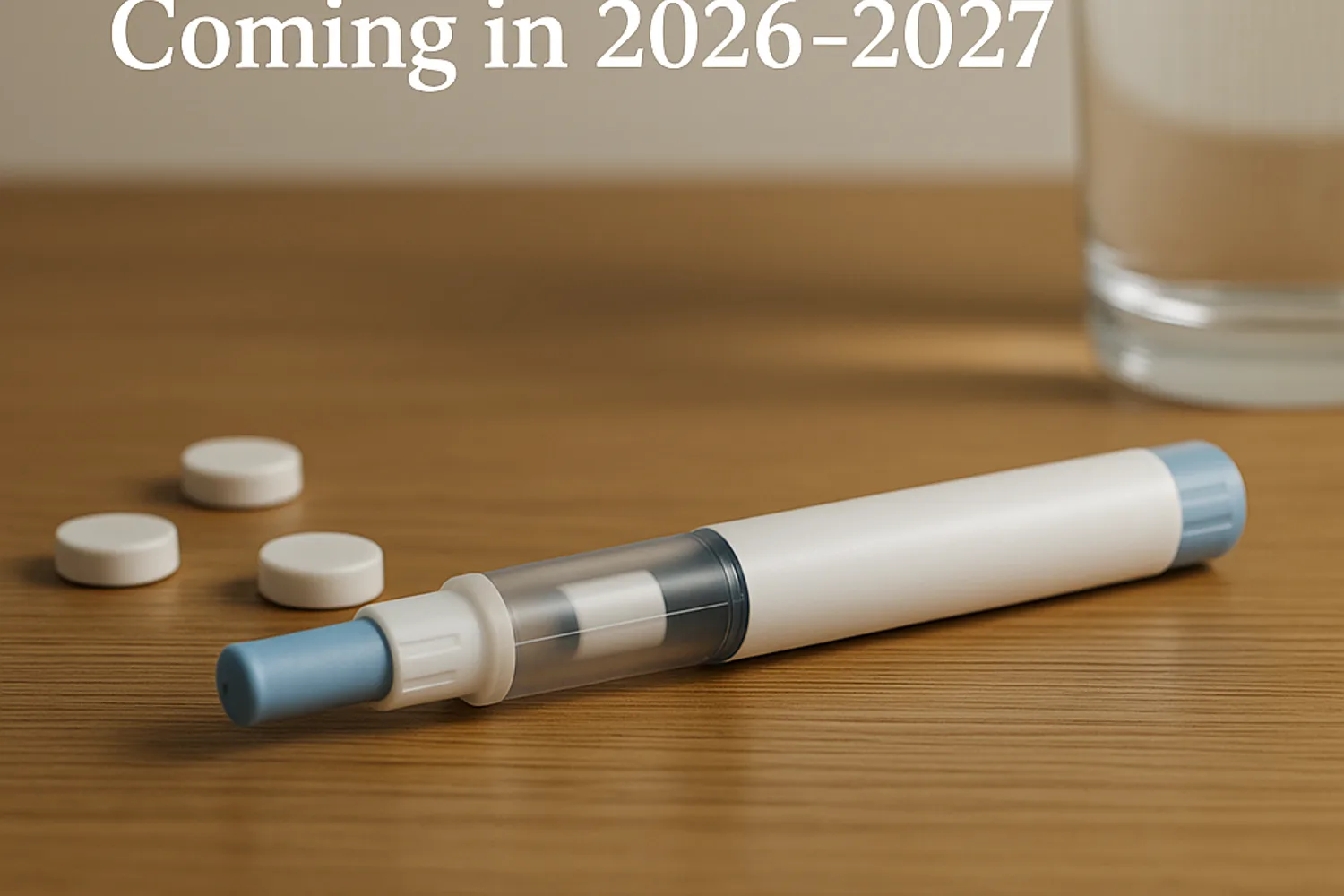
The Future of Weight Management is Here: A Look at the 2026-2027 GLP-1 Pipeline
The world of weight management is evolving at a breathtaking pace. Medications like semaglutide (found in Ozempic and Wegovy) and tirzepatide (found in Mounjaro and Zepbound) have transformed the conversation around obesity, moving it from a question of willpower to one of biology. These GLP-1 receptor agonists have provided a powerful new tool for many, but they are just the beginning.
Scientists and researchers are already deep into developing the next wave of medications, aiming for even greater effectiveness, improved safety profiles, and more convenient ways to take them. If you're wondering what comes after the current generation of drugs, you're in the right place. This is a practical, evidence-aware guide to the most promising weight management medications currently in the late stages of development, with a potential to emerge around 2026-2027.
This article is for informational purposes only and does not constitute medical advice. Consult your healthcare provider before starting any medication.
What’s Driving the Next Generation of Drugs?
Today’s most common medications primarily target a single gut hormone receptor called GLP-1 (glucagon-like peptide-1). Tirzepatide expanded on this by targeting two receptors: GLP-1 and GIP (glucose-dependent insulinotropic polypeptide). The next generation is pushing this frontier even further.
The core goals of this new wave of research are:
- Increased Efficacy: Developing treatments that lead to a greater percentage of weight loss, potentially rivaling the results of bariatric surgery for some individuals.
- Broader Benefits: Targeting multiple hormone pathways may not only help with weight and blood sugar but also offer benefits for cardiovascular health, liver health (specifically MASH, formerly known as NASH), and kidney function.
- Better Tolerability: Refining formulas to reduce common side effects like nausea and digestive upset.
- Greater Convenience: Moving beyond weekly injections to include daily oral pills and even monthly injections, making treatment easier to manage.
These goals are being pursued through several innovative approaches, from combining existing molecules to designing entirely new ones.
The Key Players to Watch: 2026-2027 Pipeline
Here are some of the most anticipated medications currently in late-stage clinical trials. While timelines in drug development can shift, these represent the leading edge of what’s to come.
Retatrutide: The Triple-Agonist
Eli Lilly, the company behind Mounjaro and Zepbound, is developing a medication that targets three distinct hormone receptors: GLP-1, GIP, and glucagon. This "triple-agonist" approach is designed to create a powerful, multi-pronged effect on appetite, metabolism, and energy expenditure.
In mid-stage clinical trials, retatrutide demonstrated a remarkable level of weight loss. Researchers are now conducting large-scale Phase 3 trials to confirm its effectiveness and safety for both obesity and type 2 diabetes. The addition of the glucagon receptor target is also being studied for its potential to directly address fat buildup in the liver, a common and serious related condition.
CagriSema: The Combination Approach
Novo Nordisk, the maker of Ozempic and Wegovy, is exploring a powerful combination therapy called CagriSema. This weekly injection isn't a single new molecule but a co-formulation of two existing ones:
- Semaglutide: The well-known GLP-1 agonist.
- Cagrilintide: An amylin analogue, which works through a different pathway to help regulate appetite and slow stomach emptying.
The theory is that by targeting two separate but complementary biological systems, the combination may produce a synergistic effect, leading to greater weight loss than either drug could achieve alone. Phase 3 trials are underway to see if this hypothesis holds true in a large and diverse patient population.
Orforglipron: The Simplicity of a Daily Pill
One of the biggest hurdles for some people is the idea of a weekly injection. To address this, Eli Lilly is also developing orforglipron, a daily oral GLP-1 agonist. Unlike some other oral medications that require specific timing around meals, orforglipron is being studied for its convenience—a simple pill taken once a day, with or without food.
It’s a "non-peptide" molecule, meaning its structure is different from the injectable GLP-1s, which allows it to survive the digestive system and be absorbed into the bloodstream. If its Phase 3 trials are successful, orforglipron could offer a highly effective option for those who prefer a pill over an injection, significantly broadening access and appeal.
MariTide (formerly AMG 133): A Novel Mechanism and Less Frequent Dosing
Amgen is taking a unique approach with its investigational drug, MariTide. This molecule is an antibody that works in a fascinating dual-action way: it activates the GLP-1 receptor (like other drugs in this class) while simultaneously blocking the GIP receptor. This novel mechanism is a departure from tirzepatide, which activates both.
Early trial results have been promising, suggesting not only significant weight loss but also the potential for sustained results even after stopping the medication. One of the most compelling aspects of MariTide is its potential for a long-acting formulation, with researchers exploring dosing schedules as infrequent as once a month or even less often. This could represent a major leap forward in convenience.
Beyond Weight Loss: What Else Are Researchers Studying?
A crucial part of the story is that these medications are being studied for a wide range of health benefits beyond the number on a scale. Major clinical trial programs are actively investigating their impact on:
- Cardiovascular Events: Reducing the risk of heart attack, stroke, and other cardiovascular problems in people with obesity.
- Liver Disease: Treating metabolic dysfunction-associated steatohepatitis (MASH), a serious form of fatty liver disease.
- Kidney Disease: Slowing the progression of chronic kidney disease, particularly in people with type 2 diabetes.
- Sleep Apnea: Evaluating if weight loss from these drugs can improve or resolve obstructive sleep apnea.
The results of these studies will be critical in understanding the full therapeutic potential of this new generation of treatments.
What This Means For You: A Practical Outlook
The future of metabolic health and weight management looks incredibly promising. The arrival of new medications with different mechanisms, delivery methods, and side effect profiles means that healthcare providers will have a wider toolkit to personalize treatment. An oral pill might be perfect for one person, while a long-acting monthly injection may be better for another.
However, it's important to maintain a balanced perspective. These drugs are still in development, and clinical trial results must be confirmed through the rigorous regulatory review process. Furthermore, medication is just one piece of the puzzle. A foundation of balanced nutrition, regular physical activity, and adequate sleep remains the cornerstone of long-term health and well-being.
As new options become available, the most important step is to have an open and informed conversation with your doctor. They can help you understand the risks and benefits of any potential treatment and determine the best path forward for your individual health goals.
Consult your healthcare provider before starting any medication.
Sources
- ClinicalTrials.gov - U.S. National Library of Medicine trial database: https://www.clinicaltrials.gov
- U.S. Food & Drug Administration (FDA) - The Drug Development Process: https://www.fda.gov/patients/learn-about-drug-and-device-approvals/drug-development-process
- The New England Journal of Medicine - Retatrutide Phase 2 Obesity Trial results: https://www.nejm.org/doi/full/10.1056/NEJMoa2301972
- The Lancet - CagriSema Phase 2 Trial results: https://www.thelancet.com/journals/lancet/article/PIIS0140-6736(23)01163-7
- PubMed abstract related to retatrutide development: https://pubmed.ncbi.nlm.nih.gov/37385278/
- Amgen - Press release on MariTide (AMG 133) development: https://clinicaltrials.gov/
Written by
Ph. D in Food Science and Nutrition
Senior Medical Reviewer
Dr. Shunmukha Priya. S is a Ph. D in Food Science and Nutrition professional who reviews WeightEasy health content for medical and editorial accuracy.
View profile →Reviewed by
BDS / MDS
Senior Medical Reviewer
Jude Bencia is a BDS / MDS professional who reviews WeightEasy health content for medical and editorial accuracy.
View profile →