
Mounjaro Titration Schedule Explained: Doses, Timeline, and Tips
Understand the dosing schedule for Mounjaro, including timelines and tips to support adherence during treatment.
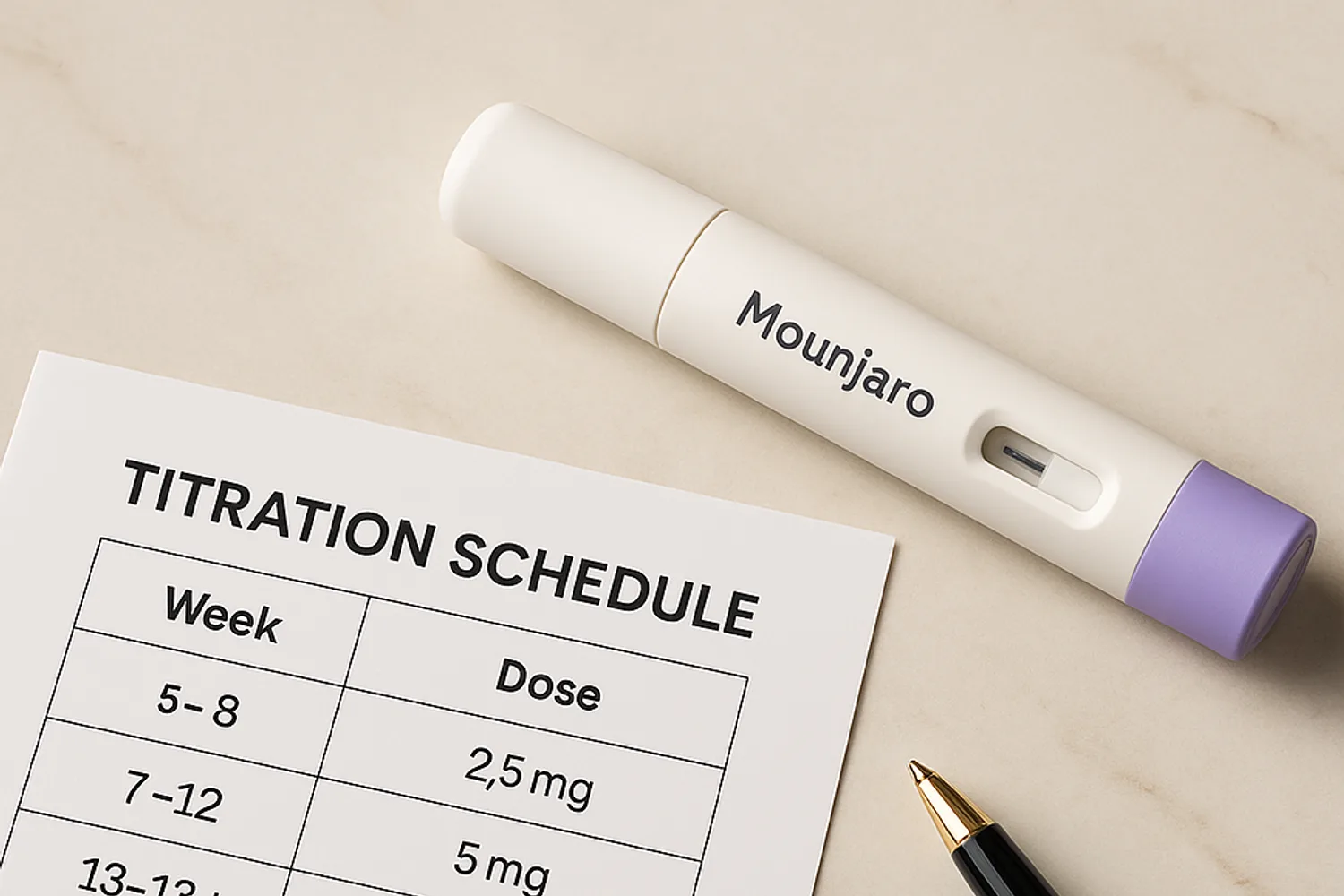
Mounjaro Titration Schedule Explained: Doses, Timeline, and Tips
Starting a new medication like Mounjaro (tirzepatide) can bring up a lot of questions. One of the most common topics is the "titration schedule." You may have heard this term from your doctor or seen it online. It sounds technical, but the concept is simple and crucial for a successful start to your treatment.
This article provides a clear, realistic look at the typical Mounjaro titration schedule. We’ll cover the standard doses, what to expect along the way, and tips for making the process as smooth as possible. Understanding this "start low, go slow" approach is key to partnering with your healthcare team effectively. Consult your healthcare provider before starting any medication.
Understanding the "Start Low, Go Slow" Approach
Titration is a common medical practice where the dose of a new medication is increased gradually over time. Instead of starting you on a high dose right away, your doctor will begin with a very small dose and slowly step it up over several weeks or months.
This method is used for medications like Mounjaro for two primary reasons:
-
To Minimize Side Effects: GLP-1 receptor agonists, the class of medications that includes Mounjaro, primarily work in your digestive system. Starting with a low dose gives your body time to adjust, which can help lessen common gastrointestinal side effects like nausea, diarrhea, or constipation.
-
To Find Your Optimal Dose: Not everyone needs the maximum dose of a medication to achieve their health goals. The titration process helps you and your doctor find the lowest effective dose that provides the benefits you need with the fewest side effects. It’s a personalized process aimed at finding what works best for your body.
The Standard Mounjaro Dosing Ladder
The Mounjaro titration schedule follows a clear, step-by-step process. Each dose comes in a single-use pen, and you typically stay at each dose level for at least four weeks before moving to the next one, if needed.
It's important to remember that this is a standard guideline. Your doctor will create a plan tailored to your specific health needs and how you respond to the medication.
Starting Dose: 2.5 mg
- Duration: Typically for the first 4 weeks.
- Purpose: This is considered a "starter" or introductory dose. Its main purpose is not to provide significant therapeutic effects but to let your body get used to the medication. Many people do not experience significant appetite suppression or weight loss during this first month, and that is completely normal.
First Increase: 5 mg
- Duration: At least 4 weeks.
- Purpose: After a month on the 2.5 mg dose, your doctor may move you up to 5 mg. This is the first therapeutic dose, and it's where many people begin to notice more pronounced effects on their appetite, satiety (feelings of fullness), and potentially their weight or blood sugar levels.
Subsequent Increases: 7.5 mg, 10 mg, and 12.5 mg
- Duration: At least 4 weeks at each level.
- Purpose: If you and your doctor decide that you need a stronger effect, you will continue to increase the dose in 2.5 mg increments. The steps are 7.5 mg, 10 mg, and 12.5 mg. The decision to increase is based on your health outcomes, how well you're tolerating the medication, and your overall goals.
Maximum Dose: 15 mg
- Duration: Ongoing maintenance dose, if needed.
- Purpose: The highest available dose of Mounjaro is 15 mg. Reaching this dose is not the goal for everyone. Many people find success and achieve their health goals on lower maintenance doses, such as 5 mg, 7.5 mg, or 10 mg.
Your Titration Journey: Timeline and Sensations
Everyone’s experience is unique, but there are some common patterns people report as they move up the Mounjaro dosing ladder.
The First Month (2.5 mg)
Think of this month as your body’s orientation period. The most common experiences are related to your body adjusting. You might feel mild, transient side effects like nausea, a feeling of fullness, or changes in your bowel habits. These often subside within a few days or a week after the first injection. Any effects on appetite are typically subtle at this stage.
Months 2 and Beyond (5 mg and up)
As you move to the 5 mg dose and potentially higher, the medication's intended effects usually become more apparent. You may notice:
- Increased Satiety: You feel full faster and for longer after meals.
- Reduced "Food Noise": Many people describe a decrease in constant, intrusive thoughts about food.
- Changes in Food Preferences: You might find you have less desire for high-fat or very sweet foods.
With each dose increase, you might re-experience some mild side effects for a short period as your body adjusts to the new level. This is a common part of the process.
Why Your Schedule Might Be Different
The standard four-week interval is a guideline, not a rule. Your doctor will personalize your titration schedule based on a few key factors.
Managing Side Effects
If you are experiencing challenging side effects on a particular dose, your doctor may decide to keep you at that level for longer than four weeks. This gives your body extra time to acclimate before attempting to move up. In some cases, they might even move you back down a dose temporarily.
Reaching Your Goals
The goal isn't to race to the highest dose. If you are meeting your health goals (such as A1c reduction or weight management) and tolerating a dose like 5 mg or 7.5 mg well, your doctor may decide to keep you there as your ongoing maintenance dose. There is often no clinical reason to increase the dose if a lower one is working effectively.
Medication Availability
Occasionally, supply shortages for certain doses can affect treatment plans. In such cases, it's essential to stay in close contact with your doctor and pharmacy to discuss the best path forward.
Tips for a Smoother Titration Journey
While titration is a guided medical process, there are simple, practical steps you can take to support your body along the way.
Stay Hydrated
Drinking plenty of water throughout the day can help manage potential side effects like nausea and constipation. Some people find that electrolyte drinks are also helpful.
Focus on Nutrition
Listen to your body's new fullness cues. Opt for smaller, more frequent meals instead of three large ones. Prioritize protein-rich foods to help you feel full and maintain muscle mass. Avoiding very greasy, fried, or sugary foods can also help minimize gastrointestinal discomfort.
Keep a Journal
Consider tracking your dose, injection day, any side effects, your food choices, and how you feel in general. This log can be an incredibly valuable tool for your appointments, helping you and your doctor make informed decisions about your treatment plan.
Communicate With Your Doctor
Maintain an open line of communication with your healthcare team. Be honest about your side effects, even if they seem minor. Report your progress and any concerns you have. This partnership is the foundation of a safe and effective treatment journey.
The Takeaway: Patience and Partnership
The Mounjaro titration schedule is a thoughtful, gradual process designed for your safety and success. It allows your body to adapt while helping you and your doctor find the dose that best supports your long-term health goals.
Remember to be patient with the process and with yourself. Every person's journey is different, and progress happens one step at a time. By working closely with your medical team, you can navigate the titration process with confidence. Consult your healthcare provider before starting any medication.
Sources
- Mounjaro Official Dosing Information: https://www.accessdata.fda.gov/drugsatfda_docs/label/2025/215866s034lbl.pdf
- U.S. Food and Drug Administration (FDA) Mounjaro Prescribing Information: https://www.accessdata.fda.gov/drugsatfda_docs/label/2022/215866s000lbl.pdf
- Mayo Clinic - Tirzepatide (Subcutaneous Route): https://www.mayoclinic.org/drugs-supplements/tirzepatide-subcutaneous-route/proper-use/drg-20534241
- The New England Journal of Medicine - SURMOUNT-1 Trial Results: https://pubmed.ncbi.nlm.nih.gov/35658024/
- European Medicines Agency (EMA) - Mounjaro Overview: https://www.ema.europa.eu/en/medicines/human/EPAR/mounjaro
Written by
Dietician / Nutritionist
Health Content Writer
Lakshmi Devi G is a Dietician / Nutritionist professional who contributes evidence-informed health and wellness content for WeightEasy.
View profile →Reviewed by
Pharmacist
Senior Medical Reviewer
Hinal is a Pharmacist professional who reviews WeightEasy health content for medical and editorial accuracy.
View profile →