
What to Eat While Taking CagriSema
Find guidance on dietary choices while taking CagriSema, focusing on safe and supportive nutrition for weight management.
What to Eat While Taking CagriSema
Taking a new medication on your weight management journey is a significant step, and it’s natural to have questions about how to best support your body. CagriSema, a combination of cagrilintide and semaglutide, works by targeting key hormones that regulate appetite and blood sugar. While the medication is a powerful tool, your daily nutrition choices play a crucial role in your success, helping you feel your best and achieve sustainable results.
This guide offers practical, evidence-aware suggestions for what to eat while taking CagriSema. It’s designed to help you navigate changes in your appetite and build healthy habits that last. Consult your healthcare provider before starting any medication.
How CagriSema Changes Your Relationship with Food
Before diving into what to eat, it helps to understand how CagriSema works. It combines two mechanisms to help you feel full sooner, stay full longer, and reduce overall hunger. One part of the medication slows down how quickly your stomach empties after a meal. The other part works with your brain’s appetite-control center.
The result for many people is a dramatic decrease in appetite. You might notice:
- You feel full after eating much smaller portions.
- The "food noise" or constant thoughts about eating quiet down.
- You are less interested in food between meals.
These changes are the intended effects of the medication. The goal is not to stop eating, but to eat in a way that nourishes your body while you lose weight.
Core Principles for Your Plate
With a reduced appetite, making every bite count becomes more important than ever. Focusing on nutrient-dense foods ensures your body gets the vitamins, minerals, and energy it needs.
Prioritize Protein
Protein is your most important nutrient during weight loss. It helps you maintain lean muscle mass, which is vital for a healthy metabolism. It also contributes significantly to feelings of fullness, which complements the effects of CagriSema.
- What to aim for: Include a source of protein with every meal and snack.
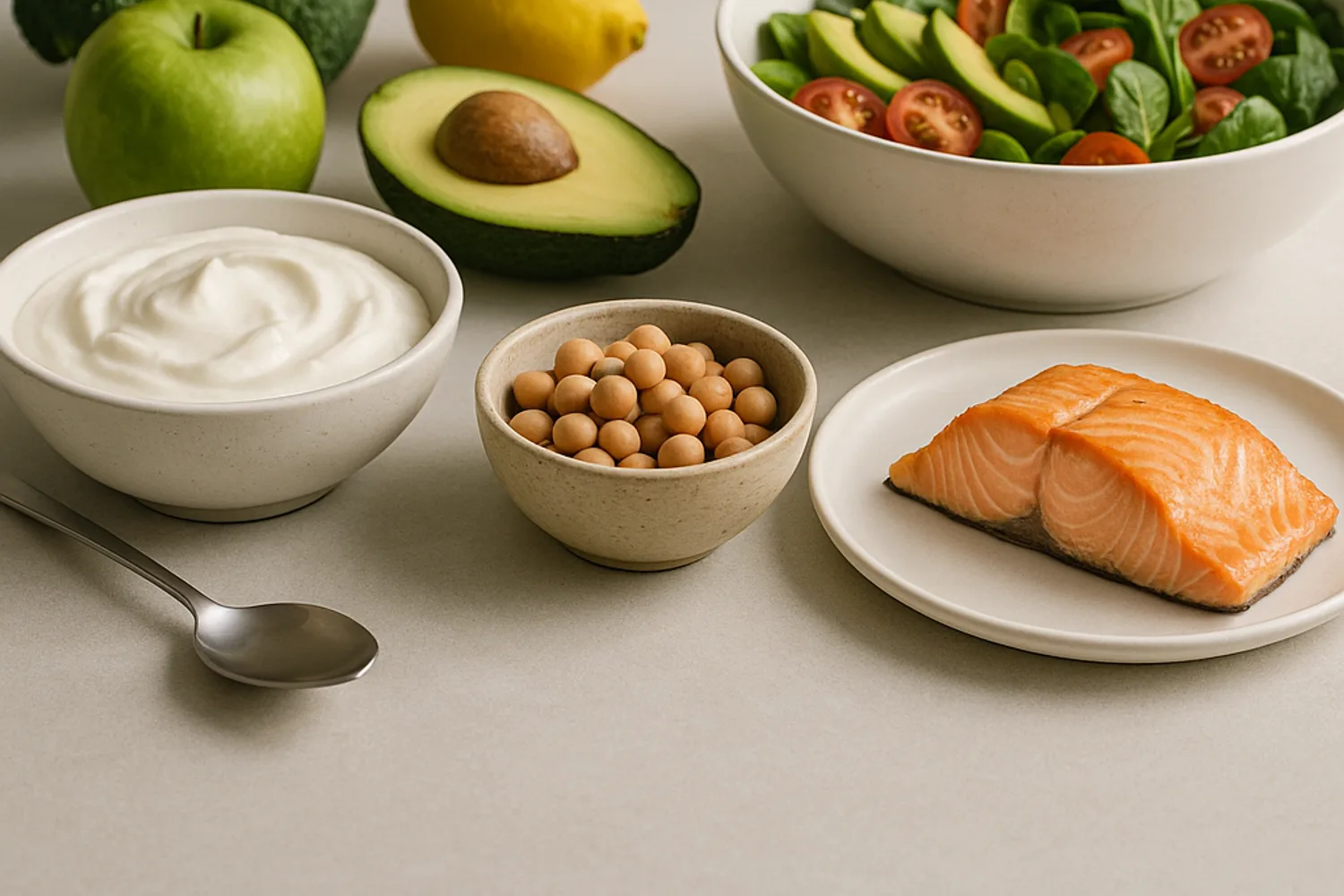
- Excellent sources include: Lean chicken and turkey, fish (like salmon and tuna), eggs, Greek yogurt, cottage cheese, tofu, edamame, lentils, and beans.
Embrace Fiber-Rich Foods
Fiber is essential for digestive health and can help manage potential side effects like constipation. It also helps stabilize blood sugar and adds to the feeling of satiety.
- What to aim for: Fill about half your plate with non-starchy vegetables.
- Excellent sources include: Leafy greens (spinach, kale), broccoli, cauliflower, bell peppers, berries, apples, beans, lentils, and whole grains like oats and quinoa.
Choose Healthy Fats
Dietary fat is not the enemy. Healthy fats are necessary for absorbing certain vitamins and supporting hormone function. They also slow digestion, which can enhance the feeling of fullness.
- What to aim for: Incorporate small portions of healthy fats into your meals.
- Excellent sources include: Avocado, nuts, seeds (chia, flax, pumpkin), and olive oil.
Stay Hydrated, Consistently
Hydration is always important, but it’s especially critical when taking a medication like CagriSema. Adequate fluid intake can help manage side effects like nausea and constipation and can also help you distinguish between true hunger and thirst.
- What to aim for: Sip on water throughout the day.
- Excellent sources include: Water is best. Unsweetened herbal tea and clear broths are also great options.
Navigating Common Side Effects with Nutrition
Some people experience gastrointestinal side effects, especially when first starting the medication or after a dose increase. Your food choices can make a significant difference in managing them.
For Nausea
If you feel nauseous, heavy or greasy meals are often the culprit. The slowed stomach emptying means food sits longer, and rich foods can make that feeling worse.
- Try this: Opt for small, frequent meals instead of three large ones. Stick to bland, easy-to-digest foods like crackers, toast, rice, bananas, or broth. Avoid fried, greasy, or very spicy foods.
For Constipation
Slower digestion can sometimes lead to constipation. The key is to respond with gentle, consistent habits.
- Try this: Slowly increase your fiber intake from vegetables and whole grains. Drastically increasing it overnight can sometimes make things worse. Most importantly, make sure you are drinking plenty of water, as fiber needs water to work effectively. Gentle movement, like a daily walk, can also help.
For a Very Low Appetite
There might be days when you have almost no appetite at all. On these days, focus on nutrient density over volume.
- Try this: A protein shake or a nutrient-rich smoothie can be a great way to get nutrition without having to eat a full meal. A small bowl of Greek yogurt with a few berries or a piece of cheese can also provide quality protein and calories.
Practical Tips for Mealtime Success
Knowing what to eat is one thing; putting it into practice is another. Here are some tips to make it easier.
Listen to Your Body’s New Cues
Your old hunger and fullness signals are changing. It’s time to learn your body’s new language. Eat slowly and pay attention. Stop when you feel satisfied, not stuffed. This might be after just a few bites, and that’s okay. Forcing yourself to finish a plate will likely lead to discomfort.
Plan for Smaller Portions
Use smaller plates to help your brain adjust to the new portion sizes. When ordering at a restaurant, consider ordering an appetizer as your main course or planning to take half of your meal home from the start.
Focus on a Gentle Routine
Your body thrives on predictability. Having meals at roughly the same time each day can help regulate your digestion and energy levels. This doesn't need to be rigid, but a gentle rhythm can be very helpful.
This journey is about building a new, sustainable relationship with food that supports your long-term health. The goal is progress, not perfection. By focusing on high-quality, nutrient-dense foods and listening to your body, you can work with CagriSema to achieve your health goals. As you navigate this path, remember that support is available from healthcare professionals and communities like WeightEasy to help you succeed.
Consult your healthcare provider before starting any medication.
Sources
- Novo Nordisk REDEFINE 1 CagriSema results release: https://www.novonordisk.com/news-and-media/news-and-ir-materials/news-details.html?id=915082
- https://clinicaltrials.gov/study/NCT04982244
- https://www.hsph.harvard.edu/nutritionsource/healthy-eating-plate/
- https://www.mayoclinic.org/healthy-lifestyle/weight-loss/in-depth/weight-loss/art-20047752
- https://medlineplus.gov/druginfo/meds/a618008.html
Written by
Dietician / Nutritionist
Health Content Writer
Gantagi shalini is a Dietician / Nutritionist professional who contributes evidence-informed health and wellness content for WeightEasy.
View profile →Reviewed by
Dietician / Nutritionist
Senior Medical Reviewer
Dt Neha is a Dietician / Nutritionist professional who reviews WeightEasy health content for medical and editorial accuracy.
View profile →