
What to Eat While Taking Retatrutide
Learn about dietary recommendations to consider while using Retatrutide to support your weight management goals safely.
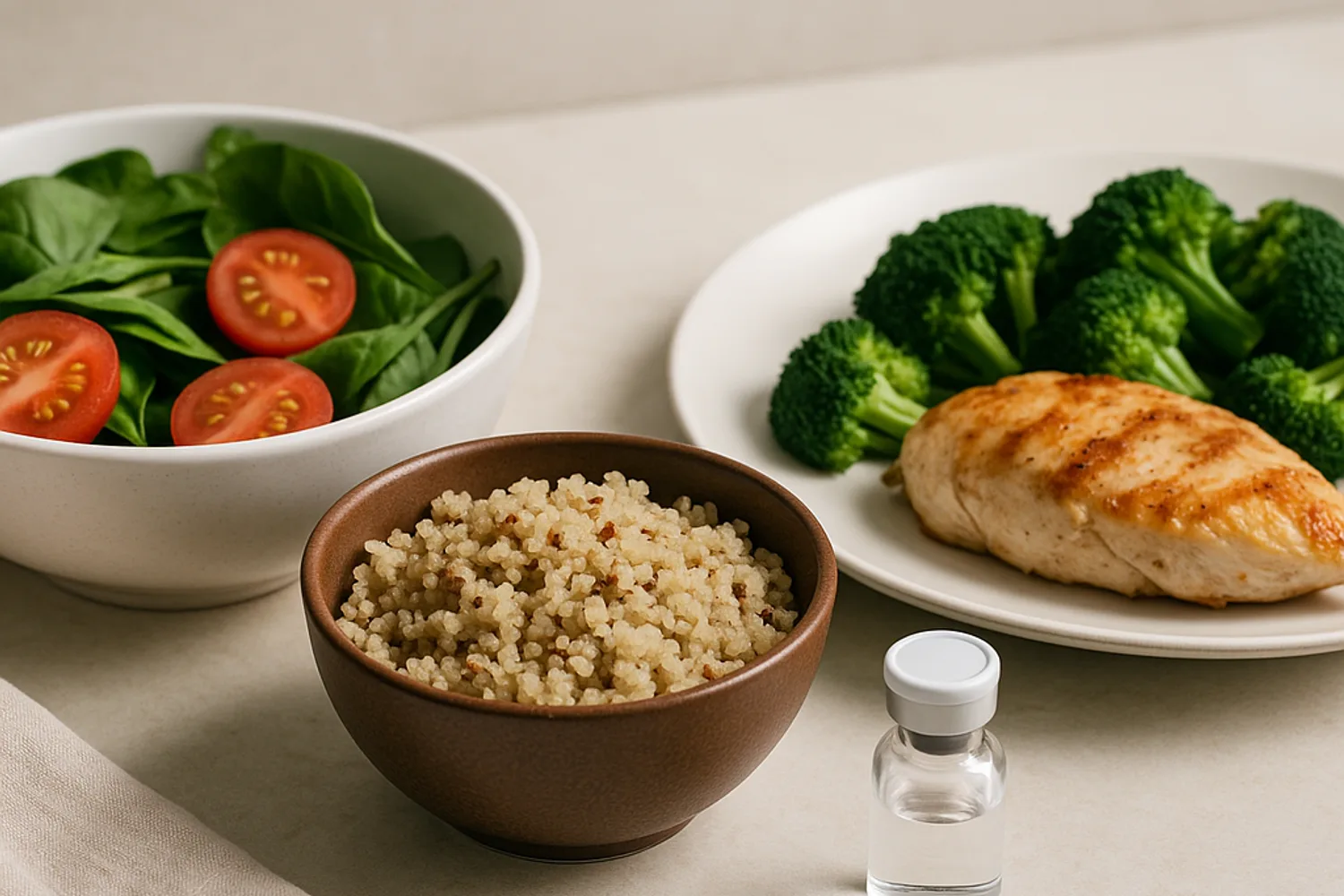
What to Eat While Taking Retatrutide
Retatrutide is an investigational medication being studied for weight management and type 2 diabetes. As a triple-agonist that targets three different hormone receptors (GIP, GLP-1, and glucagon), it works by influencing appetite, satiety, and metabolism. While the medication is a powerful tool, it works best as part of a comprehensive lifestyle approach. The food you eat plays a crucial role in supporting your health, managing potential side effects, and building sustainable habits for long-term success.
This guide offers a practical overview of nutritional strategies to consider while taking retatrutide. It focuses on creating a balanced, nutrient-rich diet that helps you feel your best. Consult your healthcare provider before starting any medication.
The Foundation: A Nutrient-Dense Approach
The primary goal of your diet while on retatrutide is not about severe restriction, but about optimizing nutrition. Because the medication helps reduce your appetite, the food you do eat needs to be packed with the vitamins, minerals, and macronutrients your body needs to function well. Think of it as making every bite count.
A balanced approach centers on whole foods—foods that are as close to their natural state as possible. This means prioritizing lean proteins, fiber-rich carbohydrates, healthy fats, and plenty of fluids.
Prioritizing Protein for Satiety and Muscle Health
Protein is your closest ally during a weight management journey. It's essential for several reasons.
First, protein is highly satiating, meaning it helps you feel full and satisfied for longer periods. This works in harmony with retatrutide's appetite-suppressing effects, making it easier to manage hunger. Second, when you lose weight, you risk losing not just fat but also lean muscle mass. Consuming adequate protein helps preserve that metabolically active muscle tissue, which is vital for strength and a healthy metabolism.
What to Eat
- Lean Meats: Chicken breast, turkey, lean cuts of beef and pork.
- Fish: Salmon, tuna, cod, and other fish are excellent sources of protein and omega-3 fatty acids.
- Eggs: A versatile and affordable protein powerhouse.
- Dairy: Greek yogurt, cottage cheese, and low-fat milk.
- Plant-Based Options: Lentils, beans, chickpeas, tofu, edamame, and quinoa.
Practical Tips
Aim to include a source of protein with every meal and snack. This could be a scoop of protein powder in a morning smoothie, a grilled chicken salad for lunch, or a handful of almonds for an afternoon snack. Spreading your protein intake throughout the day is more effective for muscle preservation than consuming it all in one large meal.
Embracing Fiber-Rich Foods for Digestion and Fullness
Fiber is another key component for feeling full and supporting digestive health, which can be particularly important when taking medications that slow down digestion.
Soluble fiber, found in oats, beans, and apples, forms a gel-like substance in your stomach that slows digestion and helps you feel satisfied. Insoluble fiber, found in whole grains and vegetables, adds bulk to stool and can help promote regularity.
What to Eat
- Vegetables: Broccoli, Brussels sprouts, leafy greens, carrots, and bell peppers.
- Fruits: Berries, apples, pears, and oranges.
- Whole Grains: Oats, quinoa, brown rice, farro, and whole-wheat bread.
- Legumes: Lentils, black beans, and chickpeas are great sources of both fiber and protein.
- Nuts and Seeds: Chia seeds, flaxseeds, almonds, and walnuts.
Practical Tips
If you're not used to a high-fiber diet, increase your intake gradually to allow your digestive system to adjust. Drinking plenty of water is essential when you increase fiber, as it helps the fiber do its job effectively and prevents constipation.
Choosing Healthy Fats for Overall Wellness
Fat is not the enemy. In fact, healthy fats are essential for hormone production, vitamin absorption, and brain health. The key is to focus on unsaturated fats while limiting saturated and trans fats.
What to Eat
- Avocados: A great source of monounsaturated fats and fiber.
- Olive Oil: Use it for salad dressings and low-heat cooking.
- Nuts and Seeds: Almonds, walnuts, chia seeds, and flaxseeds provide healthy fats and other nutrients.
- Fatty Fish: Salmon and mackerel are rich in anti-inflammatory omega-3 fatty acids.
Practical Tips
While healthy, fats are calorie-dense. Be mindful of portion sizes, such as a quarter of an avocado, a small handful of nuts, or a tablespoon of olive oil.
Navigating Potential Side Effects with Diet
Like other medications in its class, retatrutide can cause gastrointestinal side effects, especially when first starting or increasing the dose. Common ones include nausea, constipation, or diarrhea. Your diet can help manage these.
For Nausea
Nausea is often most pronounced after an injection or after eating too much.
- Eat Small, Frequent Meals: Instead of three large meals, try five or six smaller ones throughout the day.
- Choose Bland Foods: Simple foods like crackers, toast, rice, bananas, and chicken broth can be easier to tolerate.
- Avoid Greasy or Spicy Foods: High-fat, fried, or heavily spiced foods can worsen nausea for some people.
- Stay Hydrated: Sip on water, clear broths, or herbal tea throughout the day.
For Constipation
The slowing of gastric emptying can sometimes lead to constipation.
- Boost Fiber Slowly: Gradually increase your intake of high-fiber foods.
- Hydrate, Hydrate, Hydrate: Water is crucial for preventing and relieving constipation.
- Consider Gentle Movement: A daily walk can help stimulate your digestive system.
The Importance of Hydration
Staying well-hydrated is non-negotiable. Water is essential for every bodily function, from digestion to energy levels. It helps with feelings of fullness, supports your metabolism, and can alleviate side effects like constipation and headaches.
Aim for at least 64 ounces (about 2 liters) of water per day, and potentially more depending on your activity level and climate. Unsweetened herbal tea and clear broths also contribute to your fluid intake.
A Sustainable Path Forward
Adopting a new way of eating is a journey, not a destination. The goal is to build healthy, sustainable habits that will serve you long after you reach your health goals. Listen to your body’s new hunger and fullness cues, which may be very different while on retatrutide. Focus on nourishing your body with whole foods that make you feel good.
Working with a registered dietitian or nutritionist can provide personalized guidance and support. They can help you create a meal plan that fits your preferences, addresses any side effects, and ensures you're meeting your nutritional needs.
Your healthcare team is your best resource for navigating your health journey successfully. Consult your healthcare provider before starting any medication.
Sources
- A Study of Retatrutide (LY3437943) in Participants With Obesity (TRIUMPH-1) - ClinicalTrials.gov - https://clinicaltrials.gov/study/NCT05882045
- Retatrutide, a GIP, GLP-1 and Glucagon Receptor Agonist, for People with Type 2 Diabetes: A Randomised, Double-Blind, Placebo and Active-Controlled, Parallel-Group, Phase 2 Trial in People with Type 2 Diabetes - The Lancet - https://www.thelancet.com/journals/lancet/article/PIIS0140-6736(23)01053-X/fulltext
- Triple-Hormone-Receptor Agonist Retatrutide for Obesity — A Phase 2 Trial - New England Journal of Medicine - https://www.nejm.org/doi/full/10.1056/NEJMoa2301972
- PubMed abstract for retatrutide phase 2 trial - https://pubmed.ncbi.nlm.nih.gov/37385278/
- Healthy Eating for a Healthy Weight - Centers for Disease Control and Prevention (CDC) - https://www.cdc.gov/healthy-weight-growth/index.html
- PubMed record for retatrutide phase 2 obesity results: https://pubmed.ncbi.nlm.nih.gov/37385278/
Written by
B.com
Content Writer
Manish Kumar Jha is a B.com professional who contributes evidence-informed health and wellness content for WeightEasy.
View profile →Reviewed by
BHMS
Senior Medical Reviewer
Dietitian with experience in nutrition counseling, meal planning and promoting healthy lifestyles. Dedicated to help individuals achieve optimal health and well-being through personalized nutrition strategies. Skilled in providing expert guidance for managing conditions like diabetes, weight challenges and Lifestyle management.
View profile →