
Obeda Side Effects: Complete Guide for Indian Patients (2026)
What are the side effects of Obeda? This complete guide covers common, uncommon, and serious side effects of semaglutide, with practical advice on managing them.
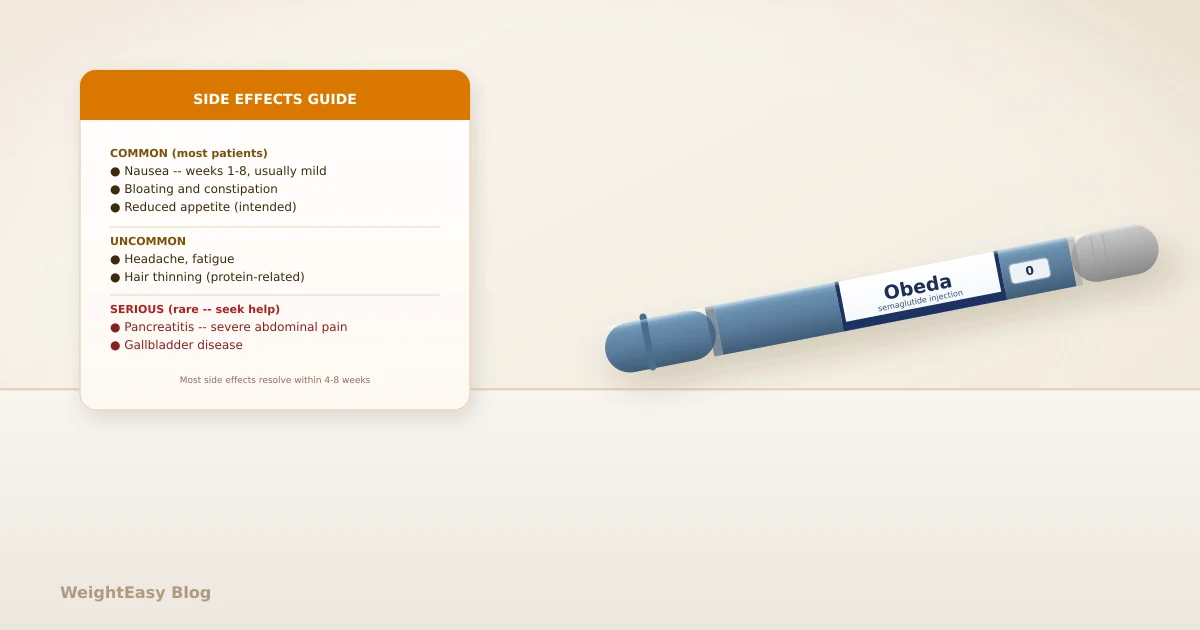
Every medication has side effects. Obeda is no exception. Knowing what to expect before you start -- and understanding what is normal versus what needs medical attention -- helps you stay safe and stay on track.
This guide covers everything: from the common and manageable to the rare and serious.
Important: Always consult your healthcare provider before starting any medication. This article is for informational purposes only.
How Obeda Causes Side Effects
Obeda contains semaglutide, a GLP-1 receptor agonist. GLP-1 receptors are found throughout the body -- not just in the pancreas and brain, but also in the gut. Activating these receptors slows stomach emptying and affects digestive motility.
Most of Obeda's side effects stem from this GI effect. The slower your stomach empties, the more likely you are to experience nausea, bloating, and digestive discomfort -- especially in the early weeks when your body is still adjusting.
Common Side Effects (Affecting More Than 1 in 10 Patients)
Nausea
The most frequently reported side effect. Typically mild to moderate in severity.
- When: Most pronounced in weeks 1-6, particularly after dose increases
- How long: Usually improves significantly by weeks 6-8; may persist mildly for some
- Severity: Usually manageable; rarely severe enough to stop treatment
- Management: Eat smaller meals, avoid heavy/fatty/spicy foods, stay hydrated, try taking the injection before bedtime. See the nausea reduction guide for detailed strategies.
Vomiting
Less common than nausea, but can occur especially in the first weeks or after dose increases.
- When: Usually linked to nausea spells; more common after eating too quickly or too much
- Management: Eat slowly, smaller portions, avoid eating until full, stay hydrated
Diarrhoea
Loose stools or increased frequency of bowel movements, typically in the early weeks.
- Management: Stay hydrated, avoid foods that worsen loose stools (very spicy food, high-fat snacks), eat easily digestible foods like rice, curd, and banana
Constipation
Slowed gut motility from semaglutide can cause constipation in some patients -- the opposite of diarrhoea.
- Management: Increase fluid intake, include fibre-rich foods (vegetables, dal, fruits), light walking after meals
Bloating and Abdominal Discomfort
Feeling of fullness, gas, or mild cramping -- common in the first 4-8 weeks.
- Management: Smaller meals, eat slowly, avoid carbonated drinks and gas-producing foods like raw onions and chickpeas in large amounts
Reduced Appetite
This is an intended effect of Obeda, but in some cases appetite drops so significantly that patients eat too little. Eating too little can cause fatigue and nutritional deficiencies.
- Management: Eat regularly even if not hungry. Focus on nutrient-dense, protein-rich foods in smaller volumes. Do not skip meals.
Uncommon Side Effects (Affecting 1 in 10 to 1 in 100 Patients)
Headache
Mild headaches are reported by some patients, particularly in the early weeks. Usually resolves as the body adjusts. Stay hydrated.
Fatigue
Some patients feel tired, especially in the first 2-4 weeks. This often relates to reduced calorie intake and the body's adjustment period. Usually improves.
Dizziness
Occasional dizziness, particularly if you are not eating enough or if blood sugar drops slightly (more relevant for diabetic patients on other medications).
Injection Site Reactions
Mild redness, itching, or swelling at the injection site. Usually minor. Rotating injection sites (abdomen, thigh, upper arm) reduces this.
Hair Loss (Telogen Effluvium)
Some patients report increased hair shedding 2-4 months into treatment. This is typically not caused by semaglutide directly, but by rapid weight loss and reduced calorie intake causing nutritional stress.
- Management: Ensure adequate protein intake (at least 1.2-1.5g per kg of body weight daily), consider a multivitamin, discuss with your doctor if significant
Burping
Increased belching, particularly after eating. Related to slowed gastric emptying. Eating more slowly and avoiding gulping food or drinks helps.
Serious Side Effects (Rare but Important)
Acute Pancreatitis
Inflammation of the pancreas. Rare but reported with GLP-1 medications.
Signs: Severe, persistent pain in the upper abdomen, often radiating to the back; nausea and vomiting that does not improve; fever.
Action: Stop Obeda and seek immediate medical attention.
Gallbladder Disease (Cholelithiasis/Cholecystitis)
Weight loss, particularly rapid weight loss, increases the risk of gallstones. GLP-1 medications have also been associated with a modest increase in gallbladder events.
Signs: Pain in the upper right abdomen (especially after eating), nausea, fever.
Action: Report to your doctor.
Diabetic Retinopathy Worsening
Rapid improvement in blood sugar control (which Obeda can cause in diabetic patients) may temporarily worsen existing diabetic eye disease. This is more of a risk in patients with pre-existing retinopathy.
Action: Inform your ophthalmologist if you have diabetic eye disease before starting Obeda.
Hypoglycaemia (Low Blood Sugar)
Obeda alone rarely causes hypoglycaemia. However, if you take other diabetes medications (especially insulin or sulfonylureas) alongside Obeda, the combined effect can lower blood sugar too much.
Signs: Shakiness, sweating, confusion, rapid heartbeat, feeling faint.
Action: Discuss medication adjustments with your doctor before starting Obeda. Keep glucose tablets or a sweet snack accessible.
Serious Allergic Reaction
Very rare. Signs include difficulty breathing, swelling of face or throat, severe rash.
Action: Seek emergency medical attention immediately.
Thyroid Tumours (Theoretical)
Animal studies showed thyroid C-cell tumours with semaglutide. This has not been confirmed in humans. However, Obeda is contraindicated in people with a personal or family history of medullary thyroid carcinoma or MEN2 syndrome as a precaution.
Side Effect Management Summary
| Side Effect | When | What Helps |
|---|---|---|
| Nausea | Weeks 1-8 | Smaller meals, bland food, bedtime injection |
| Vomiting | Weeks 1-4 | Eat slowly, small portions |
| Diarrhoea | Weeks 1-6 | Hydration, gentle diet |
| Constipation | Ongoing possible | Fibre, water, walking |
| Bloating | Weeks 1-8 | Slow eating, avoid gas-inducing foods |
| Fatigue | Weeks 1-4 | Rest, adequate nutrition |
| Hair loss | Months 2-5 | Adequate protein intake |
When to Call Your Doctor
Call your doctor if you experience:
- Severe abdominal pain that does not resolve
- Signs of pancreatitis (pain radiating to the back)
- Signs of gallbladder disease (right upper quadrant pain after eating)
- Symptoms of low blood sugar in diabetic patients
- Worsening vision
- Any sign of allergic reaction
How WeightEasy Helps You Manage Side Effects
Side effects in the first 4-8 weeks are the most common reason patients consider stopping Obeda before it has had a chance to work. WeightEasy includes structured side effect tracking and management guidance -- helping you distinguish what is normal from what needs attention, and giving you specific dietary and timing strategies to reduce discomfort.
Understanding what to eat while taking Obeda is one of the most effective ways to manage GI side effects -- and WeightEasy makes that personalised for you.
If you are starting Obeda, the right support can make a significant difference. WeightEasy helps you stay consistent, manage side effects, and achieve better results.
The Bottom Line
Obeda's side effects are real but manageable for the vast majority of patients. Nausea in the early weeks is the most common challenge. Serious side effects are rare. Knowing what to expect and how to respond makes the difference between pushing through to results and giving up too early.
Consult your healthcare provider before starting any medication.
Sources
- Dr. Reddy's Laboratories -- Obeda prescribing information and safety data (2026)
- Novo Nordisk -- semaglutide safety profile (SUSTAIN and STEP trial adverse event data)
- DCGI -- approved safety labelling for semaglutide in India
- American Gastroenterological Association -- GLP-1 receptor agonist GI adverse effects review
- WeightEasy clinical advisory team
FAQ
What are the most common side effects of Obeda?
The most common side effects are nausea, vomiting, diarrhoea, constipation, and bloating. These are typically mild to moderate and most common in the first 4-8 weeks of treatment as the body adjusts. They usually reduce significantly after the initial period.
How long does nausea last on Obeda?
For most patients, nausea is most pronounced in weeks 1-4 and improves significantly by weeks 6-8. A minority of patients continue to experience mild nausea throughout treatment. It rarely causes patients to stop treatment when managed correctly.
Are Obeda side effects dangerous?
Most side effects are mild and manageable. Serious side effects are rare but include acute pancreatitis, gallbladder disease, and severe allergic reactions. Anyone who experiences severe abdominal pain, signs of allergic reaction, or vision changes should contact their doctor immediately.
Can I reduce nausea from Obeda?
Yes. Eating smaller meals, avoiding fatty or spicy foods, staying hydrated, taking the injection at night before sleep, and gradually increasing your dose all help reduce nausea significantly. Read the Obeda nausea reduction guide for detailed strategies.
Does Obeda cause hair loss?
Hair loss (telogen effluvium) has been reported by some semaglutide users. This is generally related to rapid weight loss and nutritional changes rather than the medication itself. Ensuring adequate protein intake significantly reduces this risk.
What should I do if I experience severe side effects on Obeda?
Stop the medication and contact your doctor immediately if you experience severe abdominal pain, signs of pancreatitis (persistent upper abdominal pain radiating to the back), signs of gallbladder problems, severe allergic reaction, or rapid heartbeat.