
Best Exercise Plan While on Obeda: What Works and What to Avoid
Exercise on Obeda amplifies results and protects muscle mass. This guide covers the best types of exercise for semaglutide users in India, how much to do, and common mistakes to avoid.
Obeda reduces appetite significantly. This creates a calorie deficit that drives weight loss. But there is a risk that comes with any significant calorie deficit: muscle loss alongside fat loss.
Exercise -- particularly resistance training -- is the primary tool for ensuring that the weight you lose on Obeda is predominantly fat, not muscle. It also amplifies overall results and builds the habits that protect your progress after treatment.
This guide covers what actually works for Indian patients on semaglutide.
Important: Always consult your healthcare provider or a qualified fitness professional before starting a new exercise programme, especially if you have cardiovascular disease, joint problems, or diabetes. This article is for informational purposes only.
Why Exercise Matters More on Obeda Than on Other Diets
When you restrict calories significantly (as Obeda helps you do), your body draws energy from both fat stores and muscle tissue. Without resistance training, studies suggest 25-40% of weight lost on semaglutide can come from lean mass.
Losing muscle has real consequences:
- Lower resting metabolic rate (easier to regain weight when stopping)
- Weaker physical function
- Poorer blood sugar control
- Worse body composition despite lower scale weight
Resistance training signals the body to preserve muscle even in a calorie deficit. Combined with adequate protein intake, it ensures the weight you lose is predominantly fat -- which is both healthier and produces better physical results.
The Two-Component Plan
The most effective exercise strategy on Obeda combines two types of training:
Component 1: Resistance Training (Priority)
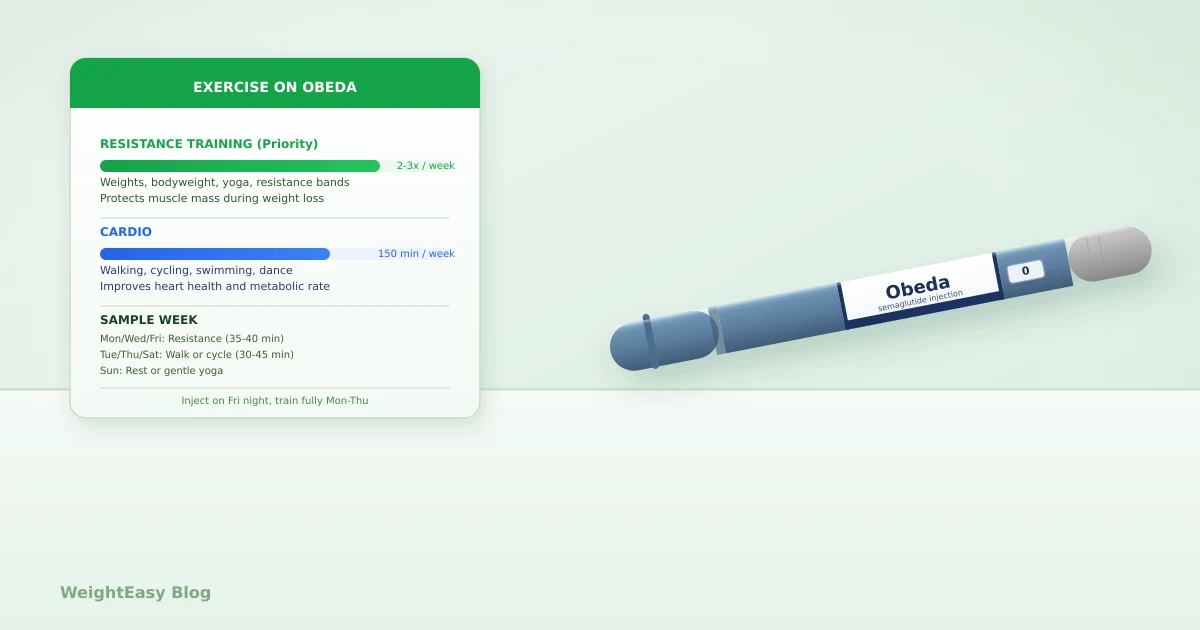
Resistance training -- using weights, resistance bands, or bodyweight -- is the most important type of exercise on semaglutide. It directly protects muscle mass.
Minimum: 2 sessions per week Optimal: 3 sessions per week, 30-45 minutes each
Accessible Indian options:
- Gym-based: Compound movements -- squats, deadlifts, bench press, rows, shoulder press. These work multiple muscle groups simultaneously and are the most time-efficient.
- Home-based (no equipment): Bodyweight squats, lunges, push-ups, plank variations, glute bridges. A resistance band set (costs Rs. 500-1,000) dramatically expands home options.
- Yoga: Heavy Hatha or Vinyasa yoga is genuinely resistance-building. A dedicated yoga practice 3x per week provides meaningful muscle stimulus.
- Body-pump style classes: Available at most urban gyms, effective and guided.
Key principle: Progressive overload. Gradually increase resistance or repetitions over time. Your muscles need to be challenged to adapt and be preserved.
Component 2: Moderate Cardio (Metabolic Health and Calorie Burn)
Cardio improves cardiovascular health, manages blood sugar, and adds to the calorie deficit. It also significantly improves mood and energy -- important during the early weeks of Obeda when some patients feel fatigued.
Minimum: 150 minutes of moderate-intensity cardio per week Optimal: 200-250 minutes per week
Accessible Indian options:
- Walking: The most practical. 30-45 minutes daily, brisk pace (you should be able to talk but feel slightly breathless). Evening walks are culturally normal and sustainable.
- Cycling: Excellent low-impact cardio. Can be done outdoors or on a stationary bike.
- Swimming: Outstanding for joint-friendly cardio, especially for heavier patients with knee or hip discomfort.
- Dance/Zumba: Popular in Indian urban settings, excellent cardio, genuinely enjoyable.
- Yoga (flowing styles): Surya Namaskar sequences at a consistent pace provide meaningful cardio stimulus.
A Sample Weekly Plan for Obeda Users
| Day | Activity | Duration |
|---|---|---|
| Monday | Resistance training (full body) | 35-40 min |
| Tuesday | Brisk walking | 30-40 min |
| Wednesday | Resistance training (lower body focus) | 35-40 min |
| Thursday | Walking or cycling | 30-40 min |
| Friday | Resistance training (upper body focus) | 35-40 min |
| Saturday | Yoga or swimming | 45 min |
| Sunday | Rest or gentle walk | Optional |
This is an intermediate plan. Beginners should start with 2 resistance sessions and 3 walking sessions per week, then build up over 4-6 weeks.
Exercising Around Your Injection Day
Most patients experience nausea most strongly in the 24-48 hours after their weekly injection. Adjust your exercise accordingly:
- Injection day and day after: Keep exercise light -- gentle walking, stretching, or rest if nausea is significant
- Days 3-7 post-injection: Most patients feel best during this period -- schedule more intense sessions here
Many patients choose to inject on a Friday night, experience mild nausea over the weekend, and are back to full training capacity by Monday.
The Nutrition-Exercise Connection on Obeda
Exercise and diet work together on semaglutide. The most important nutritional support for your exercise plan:
- Protein: 1.2-1.5g per kg body weight daily -- non-negotiable for muscle preservation. Prioritise protein at every meal. See the Obeda diet guide for specific Indian food recommendations.
- Timing: Eating a small protein-rich snack before resistance training (if you can tolerate food around that time) helps muscle protein synthesis. Examples: a boiled egg, small bowl of curd, handful of roasted chana.
- Hydration: Exercise increases fluid needs. On Obeda, where reduced appetite may mean you are also eating less fluid-containing food, conscious hydration is important. Aim for 2.5-3 litres on exercise days.
What to Avoid
- Intense fasted cardio on Obeda: Training in a fasted state while already in an Obeda-induced calorie deficit can cause significant fatigue and muscle catabolism. Have a small snack before longer or more intense sessions.
- Overtraining: Obeda creates a calorie deficit. Adding excessive exercise on top can cause fatigue, disrupted sleep, and paradoxical muscle loss. More is not always better.
- Ignoring pain signals: Joint pain in overweight patients is common. Choose low-impact activities (walking, swimming, cycling) if knees or hips are affected. Address joint issues rather than pushing through them.
Exercise After Stopping Obeda
One of the strongest predictors of maintaining weight loss after stopping Obeda is having a well-established exercise routine. Patients who built consistent activity habits during treatment maintain significantly more of their results than those who relied primarily on the medication.
Think of the treatment period as your window to build the exercise habits that will protect your results long-term.
How WeightEasy Supports Your Exercise Journey
Diet, exercise, and medication work as a system. WeightEasy provides habit coaching and personalised guidance that helps GLP-1 users in India build sustainable exercise routines alongside their dietary and medication changes.
The goal is not just weight loss during treatment -- it is building the foundation for long-term results.
If you are starting Obeda, the right support can make a significant difference. WeightEasy helps you stay consistent, manage side effects, and achieve better results.
The Bottom Line
Exercise on Obeda is not optional for optimal results. Resistance training preserves muscle and improves body composition. Moderate cardio supports metabolic health and the calorie deficit. Together, they amplify results and protect long-term outcomes.
Start where you are. Build consistently. The combination of Obeda and regular movement is significantly more powerful than either alone.
Consult your healthcare provider before starting a new exercise programme.
Sources
- Wilding JPH et al. -- body composition outcomes in STEP-1 trial (BMJ 2021)
- Lundgren JR et al. -- semaglutide combined with exercise (Nature Medicine 2021)
- American College of Sports Medicine -- exercise guidelines for obesity management
- Obesity Medicine Association -- physical activity recommendations with GLP-1 therapy
- WeightEasy clinical advisory team
FAQ
Should I exercise while on Obeda?
Yes. Exercise is strongly recommended alongside Obeda. It amplifies weight loss, helps preserve muscle mass during fat loss, improves metabolic markers, and significantly reduces the risk of weight regain if you stop the medication.
What type of exercise is best on Obeda?
A combination of resistance training (weights, bodyweight exercises) and moderate cardio (walking, cycling, swimming) produces the best results. Resistance training is particularly important for preserving muscle mass during the calorie deficit created by semaglutide.
How much exercise should I do on Obeda?
Start with 150 minutes of moderate activity per week (30 minutes, 5 days). Include resistance training at least 2-3 times per week. This is the minimum recommended by most obesity medicine guidelines alongside GLP-1 treatment.
Is it safe to exercise while feeling nauseous on Obeda?
Light exercise -- walking, gentle yoga -- is fine and may actually help with nausea. Intense exercise during peak nausea (usually day 1-2 post-injection) is not recommended. Listen to your body.
Can I lose muscle mass on Obeda?
Muscle loss is a risk with any significant calorie deficit, including on semaglutide. Studies show approximately 25-40% of weight lost on semaglutide can be lean mass without exercise and adequate protein. Resistance training and adequate protein intake (1.2-1.5g per kg body weight) dramatically reduce this risk.
When is the best time to exercise during the weekly Obeda cycle?
Many users inject on their scheduled day and are mildest on days 3-6 post-injection. Scheduling more intense sessions during those days, and keeping days 1-2 post-injection lighter, works well for many patients.