
Obeda for PCOS Weight Loss: Does Semaglutide Help?
Can Obeda help women with PCOS lose weight? This guide covers how semaglutide addresses PCOS-related insulin resistance, what results to expect, and what Indian women need to know.
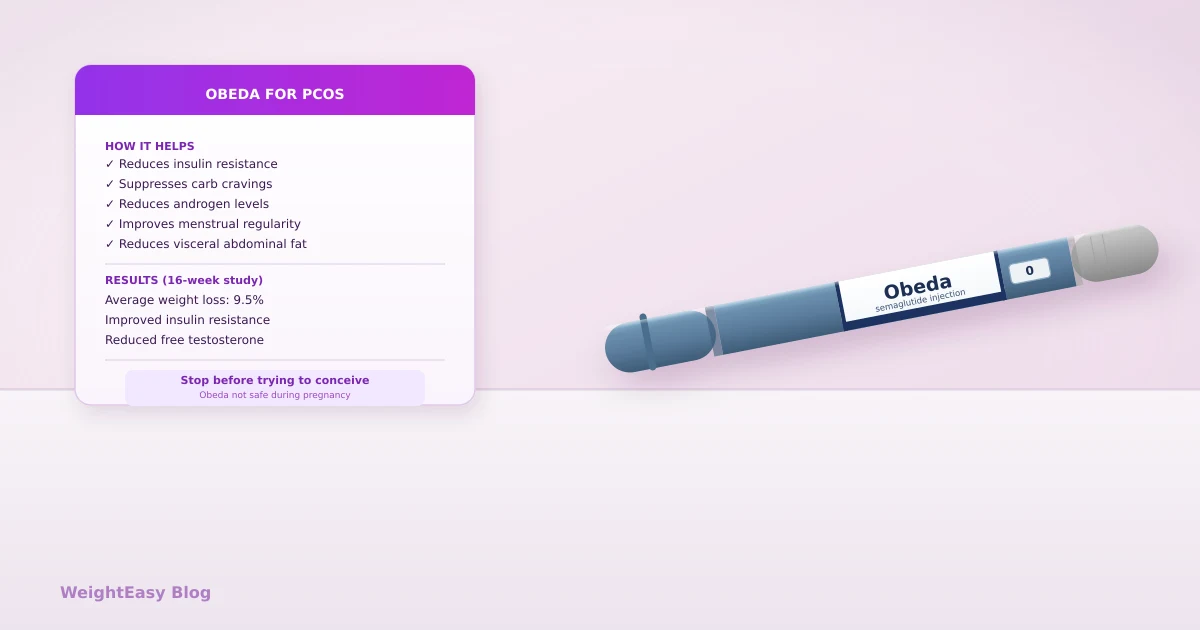
PCOS (polycystic ovary syndrome) affects approximately 1 in 5 women in India -- one of the highest prevalence rates in the world. Weight gain is one of its most challenging symptoms, and for many women, losing that weight feels impossible despite genuine effort.
With Obeda now available in India, many women with PCOS are asking: can semaglutide help?
The answer is nuanced but largely yes -- and this guide explains why.
Important: Always consult your healthcare provider before starting any medication. PCOS management requires specialist input. This article is for informational purposes only.
Why PCOS Makes Weight Loss So Hard
PCOS is not simply a reproductive condition. It is a metabolic syndrome at its core. The central driver in most cases is insulin resistance -- the body's cells become less responsive to insulin, causing the pancreas to produce more of it. Elevated insulin levels:
- Stimulate androgen (testosterone) production in the ovaries
- Promote fat storage, particularly around the abdomen
- Increase appetite and cravings, especially for carbohydrates
- Disrupt ovulation
The result: weight goes on easily, comes off with great difficulty, and the hormonal imbalance persists even with standard calorie restriction.
This is exactly the metabolic terrain where GLP-1 medications like Obeda have demonstrated the most benefit.
How Semaglutide Addresses PCOS Mechanisms
Obeda (semaglutide) acts on multiple pathways that are directly relevant to PCOS:
Reduces Insulin Resistance
Semaglutide improves insulin sensitivity both directly (by modulating insulin secretion and glucagon) and indirectly (through the weight loss it facilitates). Reduced insulin resistance means lower circulating insulin levels -- which directly reduces the ovarian androgen production that drives many PCOS symptoms.
Suppresses Appetite and Reduces Cravings
Women with PCOS often experience significantly elevated hunger and carbohydrate cravings driven by insulin resistance and elevated ghrelin. Semaglutide's GLP-1 agonism directly reduces appetite and, in many patients, reduces the intensity of carbohydrate and sugar cravings -- the specific cravings most driven by insulin dysregulation.
Promotes Significant Weight Loss
Visceral abdominal fat is metabolically active in PCOS -- it actively worsens insulin resistance and androgen excess. Semaglutide's weight loss effect reduces this fat store, improving the core metabolic drivers of PCOS.
Even a 5-10% reduction in body weight is associated with:
- Improved insulin sensitivity
- Reduced free androgen levels
- Return of ovulation in many anovulatory women
- Reduced severity of hirsutism and acne
What the Evidence Shows
Several studies have specifically examined semaglutide in women with PCOS:
A 2023 study in the Journal of Clinical Endocrinology and Metabolism found that semaglutide 1mg weekly for 16 weeks in women with PCOS and overweight produced:
- Mean weight loss of 9.5% of body weight
- Significant improvement in insulin resistance markers
- Reduction in free testosterone levels
- Improved menstrual cycle regularity in a majority of participants
These results mirror what is seen in the larger STEP trials, but with additional PCOS-specific metabolic benefits.
Who With PCOS Is a Good Candidate for Obeda?
The strongest candidates are PCOS patients with:
- BMI 27 or above with overweight and insulin resistance
- BMI 30 or above (obesity)
- Irregular or absent periods linked to weight and insulin resistance
- Failed weight loss with standard dietary and lifestyle interventions
- Type 2 diabetes or pre-diabetes alongside PCOS (very common combination in India)
Women with PCOS who are lean (normal BMI) may not meet the weight management eligibility criteria and should discuss alternatives with their specialist.
What PCOS Patients Can Realistically Expect
Results in PCOS patients are generally consistent with the broader semaglutide data, with some additional hormonal benefits:
At 3 months: 5-8% weight loss, early improvements in insulin markers, some patients reporting reduced bloating and carbohydrate cravings.
At 6 months: 8-12% weight loss typical, meaningful improvements in androgen levels, menstrual cycle improvements common in previously irregular patients.
At 12 months: 10-15% weight loss, sustained hormonal improvements, some patients able to reduce or discontinue metformin with medical supervision.
Diet on Obeda With PCOS: What Works
Women with PCOS on Obeda should pay particular attention to carbohydrate quality, since insulin resistance remains an issue even on the medication.
Prioritise:
- Low-glycaemic carbohydrates: whole roti, millets, rajma, chana, vegetables
- High protein at every meal: dal, eggs, paneer, curd, chicken, fish
- Anti-inflammatory foods: nuts, seeds, olive oil, turmeric, leafy greens
- Regular meal timing (avoid long gaps that spike insulin further)
Reduce:
- White rice in large quantities, maida-based foods, sugary drinks
- Ultra-processed snacks
- Alcohol (disrupts hormonal balance and worsens insulin resistance)
Read the detailed Obeda diet guide for full India-specific guidance.
Important Caution: Contraception While on Obeda
If you are a woman with PCOS and Obeda begins restoring ovulation (as it often does), your fertility may return or increase unexpectedly. This is a good outcome -- but it means:
- Effective contraception is essential during Obeda treatment if you are not trying to conceive
- Obeda must be stopped at least 2 months before planned conception
- Obeda is not safe during pregnancy
Discuss contraception plans explicitly with your gynaecologist when starting Obeda.
How WeightEasy Supports PCOS Patients
PCOS weight management requires a more nuanced approach than standard obesity treatment. Diet quality, carbohydrate management, and stress (which worsens cortisol-driven androgen excess) all require specific attention.
WeightEasy provides personalised dietary guidance and habit coaching tailored to individual health profiles -- including the specific metabolic considerations of PCOS patients on GLP-1 medication.
If you are starting Obeda for PCOS, the right support can make a significant difference. WeightEasy helps you stay consistent, manage side effects, and achieve better results.
The Bottom Line
Obeda is a strong option for women with PCOS who meet the weight management eligibility criteria. It addresses insulin resistance directly, suppresses PCOS-specific cravings, and produces weight loss that improves hormonal balance across the board.
For the large number of Indian women struggling with PCOS-related obesity, Obeda's launch at an accessible price point is genuinely significant news.
Speak to your gynaecologist or endocrinologist to confirm eligibility and create a comprehensive management plan.
Consult your healthcare provider before starting any medication. Obeda should not be used during pregnancy.
Sources
- Jensterle M et al. -- semaglutide 1mg in women with PCOS and obesity (JCEM 2023)
- Teede HJ et al. -- international evidence-based PCOS guidelines (Human Reproduction 2023)
- STEP-1 trial data -- semaglutide weight loss subgroup analysis by sex
- Indian PCOS Society -- prevalence and metabolic burden of PCOS in India
- WeightEasy clinical advisory team
FAQ
Can Obeda help with PCOS weight loss?
Yes. Semaglutide addresses several core mechanisms of PCOS, including insulin resistance and appetite dysregulation. Clinical evidence shows meaningful weight loss in women with PCOS on semaglutide, with additional benefits for hormonal balance and menstrual regularity in many patients.
Is Obeda approved for PCOS in India?
Obeda is approved for chronic weight management in adults with obesity or overweight with a related health condition. PCOS with overweight qualifies. However, PCOS itself is not a listed indication -- the weight management indication covers most PCOS patients who meet BMI criteria. Consult your gynaecologist or endocrinologist.
Does semaglutide improve PCOS symptoms beyond weight loss?
Research shows that weight loss from semaglutide can improve menstrual regularity, reduce androgen levels, improve insulin sensitivity, and reduce hirsutism in some women. These are secondary effects of the weight loss and improved metabolic profile, not direct hormonal effects of the drug.
Can I take Obeda alongside metformin for PCOS?
Yes, in many cases. Metformin is commonly used for PCOS management in India. Both work on insulin resistance, though through different mechanisms. Your doctor may prescribe both together. Monitor for any hypoglycaemia if you are also diabetic.
Will my periods become regular on Obeda?
Many women with PCOS report improved menstrual regularity as they lose weight on semaglutide. This is not guaranteed, but weight loss of even 5-10% can meaningfully improve hormonal balance in PCOS. Results vary by individual.
Can Obeda affect fertility in women with PCOS?
Weight loss from Obeda may improve fertility in PCOS women with anovulation linked to obesity and insulin resistance. However, Obeda should not be used during pregnancy. If conception becomes possible while on Obeda, stop it immediately and consult your doctor.