
Obeda for Weight Loss vs Diabetes: What Is It Actually Used For?
Obeda is prescribed for both weight loss and type 2 diabetes - but how does it differ between the two? This guide explains the overlap, the differences, and what Indian patients need to know.
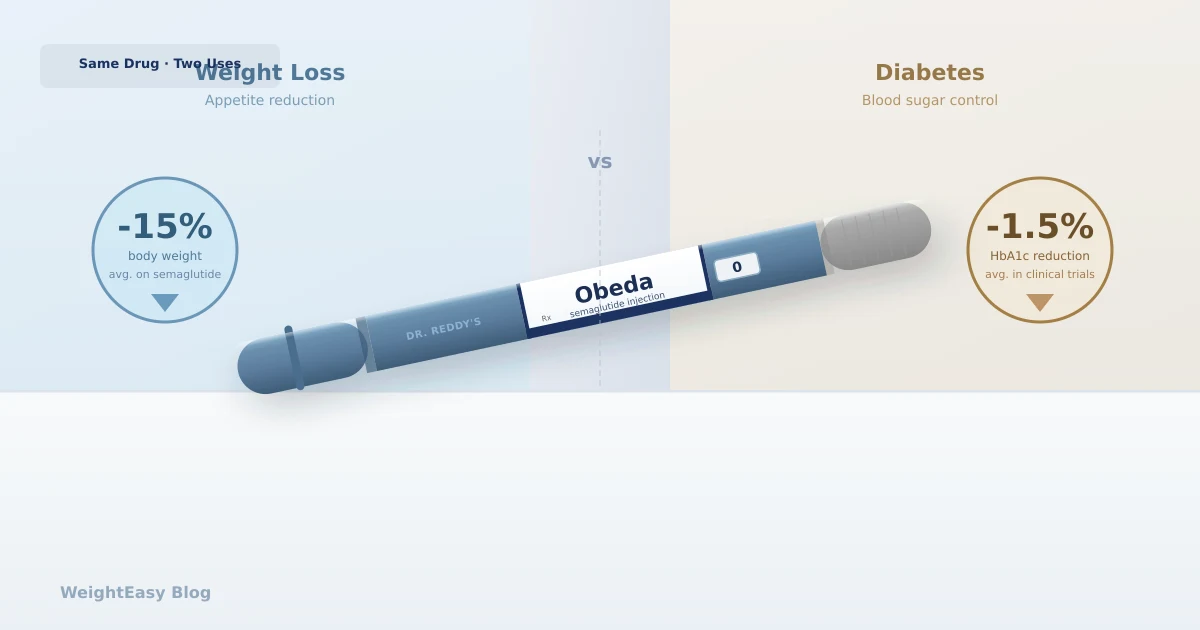
When Obeda launched in India in March 2026, it sparked a lot of questions. Is it a diabetes drug? A weight loss drug? Or both?
The short answer is: both. But the how it is used, what dose you take, and what results you can expect differ depending on why you are taking it.
Important: Always consult your healthcare provider before starting any medication. This article is for informational purposes only.
Understanding Semaglutide's Dual Role
Obeda contains semaglutide, a GLP-1 receptor agonist. GLP-1 is a naturally occurring gut hormone that:
- Signals fullness to your brain after eating
- Slows stomach emptying (which reduces hunger)
- Triggers insulin release in response to blood sugar rises
- Suppresses glucagon, a hormone that raises blood sugar
These effects address both blood sugar control (relevant for diabetes) and appetite regulation (relevant for weight loss). The molecule does both things simultaneously, which is why semaglutide has been approved for two distinct conditions.
Obeda for Type 2 Diabetes
When Obeda is used for type 2 diabetes, the primary goal is improving blood sugar control - specifically reducing HbA1c (the 3-month blood sugar average).
How It Helps Diabetes:
- Stimulates insulin secretion when blood glucose is high
- Reduces glucagon, preventing the liver from releasing excess sugar
- Slows digestion, reducing post-meal blood sugar spikes
Who It Is For:
Adults with type 2 diabetes whose blood sugar is not adequately controlled with diet, exercise, or existing medications (like metformin).
What Results to Expect for Diabetes:
Clinical trials show semaglutide reduces HbA1c by 1.0–1.8 percentage points on average. A drop from 8.5% to 6.8%, for example, is a meaningful clinical improvement.
Weight loss also occurs as a bonus - typically 5–10% of body weight in diabetes patients, though usually less than in pure weight-management dosing.
Obeda for Weight Loss
When Obeda is used for chronic weight management, the primary goal is reducing body weight in people with obesity or overweight with health complications.
How It Helps Weight Loss:
- Reduces appetite significantly - most users feel full on smaller portions
- Slows gastric emptying, so you stay full longer
- May reduce food cravings, particularly for high-calorie foods
Who It Is For:
Adults with BMI 30 or above (obesity), or BMI 27–29.9 with at least one weight-related condition (high blood pressure, pre-diabetes, sleep apnoea, etc.).
What Results to Expect for Weight Loss:
The landmark STEP trials showed that semaglutide at 2.4mg weekly produced an average weight loss of 15% of body weight over 68 weeks in people with obesity. At the 2mg dose available in Obeda, results are typically in the 10–13% range.
That translates to roughly 8–12 kg for a 75kg person, though results vary considerably based on diet, activity, and individual response. The Obeda results timeline guide breaks down what to expect week by week.
Key Differences: Diabetes vs Weight Loss Use
| Factor | Diabetes Use | Weight Loss Use |
|---|---|---|
| Primary goal | Lower HbA1c | Reduce body weight |
| BMI requirement | Not required | BMI 30+ (or 27+ with comorbidity) |
| Typical dose | 0.5–1mg weekly | 1–2mg weekly (titrated up) |
| Monitoring | Blood glucose, HbA1c | Weight, BMI, side effects |
| Common result | 5–10% weight loss + HbA1c drop | 10–15% weight loss |
| Often combined with | Metformin or other diabetes drugs | Dietary and exercise guidance |
The Overlap: People with Both Conditions
Many Indians live with both obesity and type 2 diabetes - what is often called diabesity. For this group, Obeda is particularly valuable because it addresses both problems with one injection.
Studies show that people with type 2 diabetes who use semaglutide alongside dietary changes can:
- Reduce or eliminate other diabetes medications
- Achieve significant weight loss
- Reduce cardiovascular risk (semaglutide has demonstrated heart protection benefits)
This is one reason doctors in India are enthusiastic about the Obeda launch - for patients with diabesity, it is one of the most effective tools now available at an accessible price.
Does the Side Effect Profile Differ?
The side effects are essentially the same regardless of why you are taking Obeda. Nausea, bloating, and digestive discomfort are most common in the first 4–8 weeks. These affect both diabetes and weight loss patients.
The complete Obeda side effects guide covers everything you need to know about managing these.
One nuance: if you take Obeda for diabetes alongside older diabetes medicines like sulfonylureas or insulin, your risk of hypoglycaemia (low blood sugar) increases. Your doctor will likely adjust your other medications when adding Obeda.
How WeightEasy Supports Both Use Cases
Whether you are on Obeda for diabetes, weight loss, or both, the challenge is similar: staying consistent, eating right, managing side effects, and tracking progress.
WeightEasy is built for exactly this. The platform provides dietary guidance tailored to GLP-1 users, side effect tracking, habit coaching, and progress monitoring - whether your primary goal is blood sugar control or weight loss.
If you're starting Obeda, the right support can make a significant difference. WeightEasy helps you stay consistent, manage side effects, and achieve better results.
The Bottom Line
Obeda works for both type 2 diabetes and weight loss - but it works differently depending on which condition you have, and the expectations should be calibrated accordingly.
If you have diabetes, you are looking at meaningful HbA1c reduction with moderate weight loss. If you are on it for obesity, you can expect significantly more weight loss when combined with the right lifestyle support.
Either way, the medicine needs your cooperation to work well. Diet, movement, and consistency are not optional extras - they are part of the treatment.
Consult your healthcare provider before starting any medication.
Sources
- Dr. Reddy's Laboratories - Obeda prescribing information (2026)
- SUSTAIN-1 trial: Aroda VR et al. - Semaglutide in type 2 diabetes (NEJM 2017)
- STEP-1 trial: Wilding JPH et al. - Semaglutide for weight management in obesity (NEJM 2021)
- LEADER trial - Semaglutide cardiovascular outcomes data
- American Diabetes Association - GLP-1 receptor agonist position statement (2024)
- WeightEasy clinical advisory team
FAQ
Can Obeda be used for weight loss if I don't have diabetes?
Yes. Obeda is approved for chronic weight management in adults without diabetes, provided you meet the BMI criteria (BMI 30+, or BMI 27+ with a weight-related health condition). A doctor's prescription is required.
Is the dose of Obeda different for weight loss vs diabetes?
The dose escalation follows the same schedule. However, for weight management, doctors may titrate to higher maintenance doses to maximise weight loss results. Your doctor will determine the right dose for your situation.
Does Obeda lower blood sugar even in people without diabetes?
Semaglutide stimulates insulin release only in response to blood glucose. In people without diabetes, this rarely causes blood sugar to drop to dangerous levels. However, if you take other diabetes medications alongside Obeda, your doctor will monitor this carefully.
Will I lose more weight if I have diabetes and take Obeda?
Not necessarily more. However, people with type 2 diabetes often have insulin resistance and metabolic challenges that make weight loss harder. Obeda addresses both the blood sugar and appetite dimensions, which can make it particularly effective for this group.
Is Obeda a diabetes medicine or a weight loss medicine?
It is both. Obeda contains semaglutide, which is approved for type 2 diabetes management and chronic weight management. The distinction depends on your diagnosis and what your doctor prescribes it for.